
Knowledge, understanding & personal abilities promote progress
Consider the following Information:
- The United Nations 75 Digital Report (2020) says 87% of people globally think that communication and collaboration must improve to meet life needs.
- Experts on a Project to start an alternative society, found the problem was interpersonal communication, as adults connect more with technology than each other ((EDEN-2018).
- The EU INTERMAR Inter-comprehension project (2011-14) found better understanding of others was gained by unpacking visible and invisible communication in an intercultural course (Sage, 2014).
- Professor Wiio (1978) found only 25% of face-to-face communication effective, due to limited participant knowledge and competence. Modes like technology are at a 5% level, as reduced non-verbal input limits understanding. His research influenced Finland to make intercultural communication mandatory. It is consistently the world’s happiest nation.
- The Brigman studies (1999), showed that improving communication increased all performances and led to better decision-making and a more balanced approach to situations.
- A UK Carnegie CEO Conference (2019) said communication was the top issue hindering work performance and relationships, and priority to address in plural societies.
- Taylor (2011) found Practitioner Doctorates researching within rather than on practice had more impact on work progress than PhD/Professional models - enhancing communication and collaboration amongst colleagues with better performances.
- Gawande (2011) found that miscommunication between doctor and patient (many foreign) results in faulty diagnoses in over 50% of cases to cost the UK billions in money and time.
- Professor Bozydar Kaczmarek & Marcin Stencel (2018) reviewed studies suggesting that 60% of adults do not have the language and thinking to cope effectively with life, resulting in negative economic and social impacts.
- Mahon (2022) in Beyond Z studies reported half of Gen Z lacked understanding of situations and people tolerance because limited language and communication impacted on thinking.
- Live Person (2023) 7/10 Millennials and Gen Z participants prefer to communicate digitally, so reducing effective work performances and relationships with others.]{#00000}
Reports justify improving intercultural communication knowledge and competence. Verbal and nonverbal languages, based on thinking, values and attitudes of specific cultures, may clash in plural settings, as concepts differ to cause confusions. Now, official statistics are unreliable as survey questions are often misinterpreted resulting in bad political decisions (ONS, 2025). Derrida, a philosopher, argues that in language there is presence of meaning hidden behind it, but also one of absence. In difference both presence and absence occurs. Alternative possibilities behind language, with complex meaning (nuances) must be grasped. Possibilism refers to many available possibilities. Philosophers, from Diodorus Cronus to Daniel Dennett argue for only one possibility – Actualism, linking to a mistaken belief that information is a conserved quantity, like matter and energy. Information philosophy shows content has expanded exponentially since the universe began. David Lewis language philosopher, examined ideas like truth & falsity & possibility & impossibility in modal realism, claiming that for each contradictory statement there is a possible realm where it is true. Infinite places exist, where many situations are realised, as globalisation reveals. This cosmologist's view of possible worlds is denied by Actualists.Views vary, from personal experiences, to influence free will and behaviour towards each other. In solving problems, determining action to produce alternative possibilities is the first step. The second is evaluation and third the selection of one consistent with personal customs, values, motives, reasons, feelings, etc. What becomes of possibilities not realised? Jean-Paul Sartre said they become "nothingness". Claude Shannon's Information Theory (1949) requires multiple possible content or nothing original is communicated. Without “possibilities” new information is impossible, so content, views and values cannot be created and communicated. Chance in quantum physics, is the basis for possible thoughts popping into our heads when gauging alternatives. Responses result from evaluating possibilities, debate, and choice governed by character, to make us responsible for right actions in a context, with awareness of consequences.In present culture, when other possible views are cancelled and do not count, Actualism reigns, so Possibilism helps us accept more peaceful societies, knowing opinions vary. This reality must be respected to improve communication. In a world teeming with tensions it is vital to find a pragmatic way to coexist. Key to engagement is reduction of misunderstandings underpinning conflict. Western freedom and law has different interpretations elsewhere. Meritocracy, a democratic pillar, is now the enemy of equality. Being talented, resourceful or determined is cast unfair, with people penalised to equalise with others lacking abilities, so lessening productivity. Individual desires, concerns, and actions damage the collective good. Wealth or opportunity creators support the unproductive to bust the system. Rational thinking has departed. Understanding plural societies starts with improving communication. The free programme of the Collegium of Intercultural Communication Matters assists this aim. A book of 12 topic chapters, plus a communication course, summaries and tasks at International Educational Levels 2-8, implement content. PowerPoints visualise this & videos make ideas real. A paper book will be available. A blog to post articles/information, zoom discussions and an advisory group share expertise with certification possible on request (https://icm.uwu.ai/).
Chapter 1: Diversity Dilemmas
Chapter 2: Role of Philosophy in Diverse Cultures
Chapter 3: Cultural Communication Characteristics
Chapter 4: Dealing with Differences
Chapter 5: Thinking about Thinking and Language
Chapter 6: How Labels Skew Political Identity Thinking
Chapter 7: Misunderstandings in Multicultural Societies
Chapter 8: Making a Connection with People (Phatics)
Chapter 9: Models for Teaching Intercultural Communication
Chapter 10: A Communicative Teaching Approach
Chapter 11: Teaching Form, Content and Language Use
Chapter 12: Educating for a Diverse World
Review by Bidita Sadiq
'I am particularly excited about 'Intercultural Communication Matters' by Rosemary Sage and Krzysztof Gorzkowski, as it resonates with my multicultural upbringing and, primarily, what I missed out on as a child of the 1970s. Back then, being the daughter of an asylum seeker, there was little to no support available in creating systems that would enable me as a child to 'fit' in school. As a result, I was often withdrawn and slow to process information. However, the issue lies more widely within the teaching system, with no understanding (according to my own experience) of acknowledging that I come from one culture and now two and that neither should be negated in favour of the other. Though we have developed a more global perspective in our thinking since my childhood in the workplace and our general outlook, more needs to be done. This is why the course book is invaluable in that it promotes a fundamental understanding of intercultural communication in twelve comprehensive chapters, thereby making it an essential read, not just for educators but suited towards, though not limited to - work and business, individuals, and the global citizen (looking forward to its translation in different languages)! Its chapters resonate with me in particular because they comprehensively cover the various topics that one will need to navigate successfully with a lens that accommodates non-western centric perceptions in favour of mutual intercultural communication experiences. Sartre’s philosophy addressed this by asking how understanding can be achieved even though people are different in race, culture, values, and beliefs (Fernández, 2010). The title of the first chapter: 'Diversity Dilemmas', is an essential starting point in that it focuses on 'small, simple studies' that are genuinely relatable than 'significant projects', which can feel far removed from one’s experiences and thereby hinder dialogue through active listening. As an international educator, this course has never been more critical in my teaching and learning because navigating intercultural communication in ways that feel organic and ultimately give others and oneself a valued sense of belonging requires an unpicking of those preconceptions and notions through the course-book’s mission to dissect ‘hugely complex issues influencing intercultural exchanges in a way that is relevant and meaningful.’References: Fernández, G. (2010). To Understand Understanding: How Intercultural Communication is Possible in Daily Life. Human Studies, 33(4), 371–93
Office of National Statistics (2025).Flawed data at UK statistics agency. www.ft.com/content/d1bad830-b842-482b-bb24-09c9e27b0558
ADVISORY GROUP OF HONORARY PROFESSORS (alphabetical order)
Nigel Adams, Professor& Director- Buckingham Enterprise & Innovation Unit (BEIU). [email protected]
Dr Stefano Cobello, Coordinatore della rete Polo Europeo della Conoscenza-. European Senior Project officer. [email protected]
Dr Stasia Cwenar, Linguist, Academic, SEND expert, Researcher, recently at Leicester & Liverpool Univ. [email protected]
Chaitan Rajania, Senior Leader of Educational Excellence. Noor Inayat Khan Ibn Thabit Communications Faculty Madani
Schools’ Federation, [email protected]
Dr Bozydar Kaczmarek, Professor- University of Economics and Innovation, Lublin, Poland, @wsei.lublin.pl
Dottaire Riccarda Matteucci, Educator/Researcher, In the USA, Africa and the Univ. of Cambridge UK. [email protected]
Dame Dr Elizabeth Negus, CEO of Eagles International. Co. UK. [email protected]
Naghmana Naseem, Quality Advisor in Further Education and experienced international teacher. [email protected]
Dr Jennifer Rogers, Professor, Linguist, Chartered Psychologist, Academic, recently at Leicester & Liverpool Univ. [email protected]
Juan Eduardo Romero, Professor- Departamento de Kinesiología, University of Chile. [email protected]
Bidita Sadiq, Educator with Intercultural Communication Expertise. [email protected]
Dr Emma Webster, International Dancer & Teacher. [email protected]
Patricia Willmott, Health and Safety Expert (CMIOSH) in local government, and Magistrate in UK. [email protected]
Rosemary Sage ([email protected]) & Krzysztof Gorzkowski
RECENT BOOKS BY ROSEMARY SAGE
2017: Paradoxes in Education (Editor & contributor) The experiences of the first Practitioner Doctors of Education in the UK.
2017: Silent Children. The Communication Opportunity Group approach. Pub. Nara Univ.
2019: The Robots are Here: Learning to Live with Them. (Editor & contributor). Text on issues regarding teaching for the Fourth Industrial Revolution. Legend Time Group, Buckingham University Press
2020: Speechless: Understanding Education. Legend Times Group. Buckingham University Press
2021: The Father of Modern Technology: Federico Faggin (English translator: contributor)
2022: How World Events are Changing Education Brill Academic Publishers
2024: Technology and Learning Brill Academic Publishers
2024: Life Challenges, Diverse Identities & Creative Solutions New York: Nova Scientific
COMMUNICATION AND COMPASSION IN ACTION
Click the image below to view the presentation

Help Us Grow!
Your support makes a difference.
Contribute here:
coff.ee/icm_course

Professor Doctor Rosemary Sage (Academic Principal) - is a qualified speech pathologist, psychologist and teacher; former Dean at the College of Teachers, where she led the first Practitioner Doctorate, sponsored by the European Commission. She was Director of Speech and Language Services in Leicester/Leicestershire; a Teacher in Primary and Secondary schools; Senior Language Advisor to an LEA; an Academic in 4 universities: Head of Department and Professor of Communication at Liverpool and a visiting Professor in Cuba and Japan.Rosemary is on the Queen’s Panel for Education and Industry Awards. She sat on the Lord Chancellor’s Advisory Committee as a senior magistrate (Chairperson & Judicial Mentor) and on the judicial executive and a member of the Magistrates in the Community (MIC) project.
She was on a national committee for education, training and professional development.Rosemary was a founder member of the Children’s Legal Panel and expert witness for Educational appeals; on Parliamentary Committees for Medicine and Education, the Teaching of Medical Sciences, Inclusion of Students with Special Needs & Education Advisor to the Royal College of Speech and Language Therapists. She has been a trustee of several charities, a school governor and member of many research boards.Rosemary has led international research projects on language, education and employment and medical-educational issues (e.g. Intercultural Communication Lead on the EU 27 Nation Project on Diversity). She has published many books and over 150 refereed papers in journals. National/international awards have been gained for the Communication Opportunity Group Strategy (COGS).Rosemary is a winner of the Kenneth Allsop Memorial Prize, Bullard Prize, Gimson Award, International Human Communication Network Medal, College of Teacher’s Research Award & Leverhulme Fellowship amongst others. She is a Millennium & TCOT Fellow and SEND Director for the Learning for Life Educational Trust, as well as Scientific Advisor at Abai University, Kazakhstan and a Judge for the English Speaking Union.

Christophe Gorzkowski (Production Principal) - Bachelor of Philosophy, Multimedia and IT specialist, Enthusiast of e-learning technology. Christophe has always had a keen interest in philosophy, which led him to study the subject at the University of Warsaw. However, the demands of the professional world soon claimed his attention, making it impossible for him to continue his studies while working full-time. For many years now, he has been a multimedia and IT specialist. He began his career at a video production company before briefly working in the gaming industry. Together with a friend, he founded a humanities magazine (biweekly) titled “WELCOME: Humanities Inquiries” (a rough translation), which was published in Poland in 2014.In recent years, Christophe has focused on exploring modern learning technologies, particularly e-learning and the localization of digital educational materials into many languages. He has also been involved in the design and development of e-learning courses. In 2021, he conceived the idea of creating a website dedicated to raising awareness about the e-learning industry. The goal of this site was – and still is – to broaden the knowledge of its readers and anyone interested in online courses and the technology behind them, by enabling them not only to deepen their understanding but also to access valuable free materials for use in their own e-learning courses.In 2023, together with his dear friend Rosemary, they developed the idea of transforming her extensive knowledge of intercultural communication into a free online course. They believe this topic is critically important in today’s world and should be accessible to everyone.

.
.
Blog
28.01.2026 – Juan Eduardo Romero – ABOUT SCREENS AND HUMAN INTELLIGENCE
03.07.2025 – Rosemary Sage – COMMUNICATION AND COMPASSION IN ACTION
16.06.2025 – Rosemary Sage – DISAPPEARING TALK: WHAT ARE THE CONSEQUENCES?
Welcome to "Intercultural Communication Matters"!The course is for anyone interested in understanding diversity, whether to improve working life or achieve career progression. Work-based tasks reflect requirements to undertake investigations, giving chance to build knowledge and competencies and receive feedback. On average, only 10% of us reach our potential, so life brings a big challenge. To meet this and improve life chances, we must pose questions and seek answers, by planning and implementing explorations. This is what active learning is about and often small, simple studies have more influence and impact than large-scale projects, which are not easily generalised to real situations. The course helps you get started, by looking at aspects involved in diversity. There is a choice of outcomes, with differentiated, formative tasks to achieve full understanding. These should be recorded in an e-portfolio and can be built up over time to acquire a qualification.To gain a Certificate in Professional Studies, you need to study 2, 3, 4 courses
To gain a Higher Certificate in Professional Studies, you to need to study 5, 6 courses
To gain a Masters Certificate in Professional Studies, you need to study 7 courses
To gain a Doctors Certificate in Professional Studies, you need to study 8 courses
Overview:
Chapter 1: Diversity Dilemmas
Chapter 2: Role of Philosophy in Diverse Cultures
Chapter 3: Cultural Communication Characteristics
Chapter 4: Dealing with Differences
Chapter 5: Thinking about Thinking and Language
Chapter 6: How Labels Skew Political Identity Thinking
Chapter 7: Misunderstandings in Multicultural Societies
Chapter 8: Making a Connection with People (Phatics)
Chapter 9: Models for Teaching Intercultural Communication
Chapter 10: A Communicative Teaching Approach
Chapter 11: Teaching Form, Content and Language Use
Chapter 12: Educating for a Diverse World
Module 1 - DIVERSITY DILEMMAS
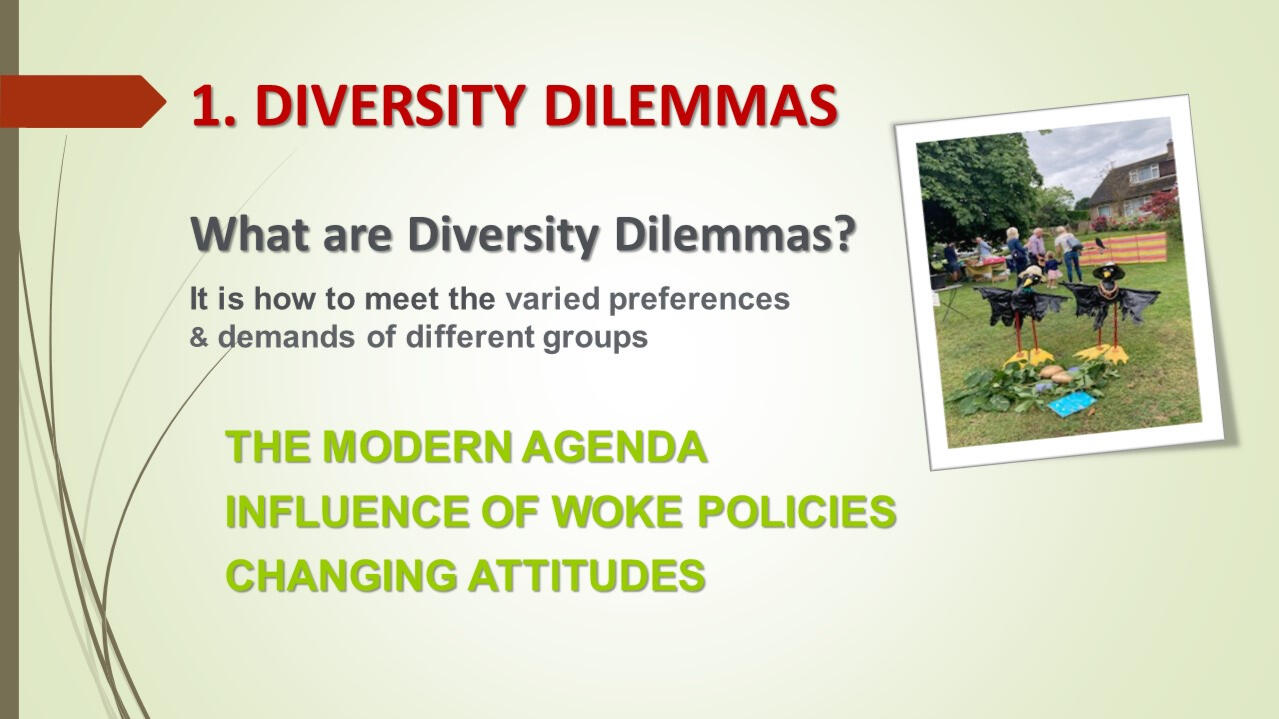
Diversity is divine in extending our experiences but is a dilemma because of the many differences it presents. Studying these brings awareness and the possibility of acceptance and adjustment. The following issues need addressing:Communication issues - diverse groups mean communication challenges from problems in different interacting & operating styles
Many opinions - make decision-making slow and may lead to delay or avoidance of issues, which lowers performance
Hostility - to those seeming different to us is a normal human reaction, so this bias needs awareness & positive action
Diversity implementation - challenges our established value systems and customs - causing tensions to take down standards
Retaining bad talent - results from positive moves to achieve diversity but means competence is not priority to depress ideals
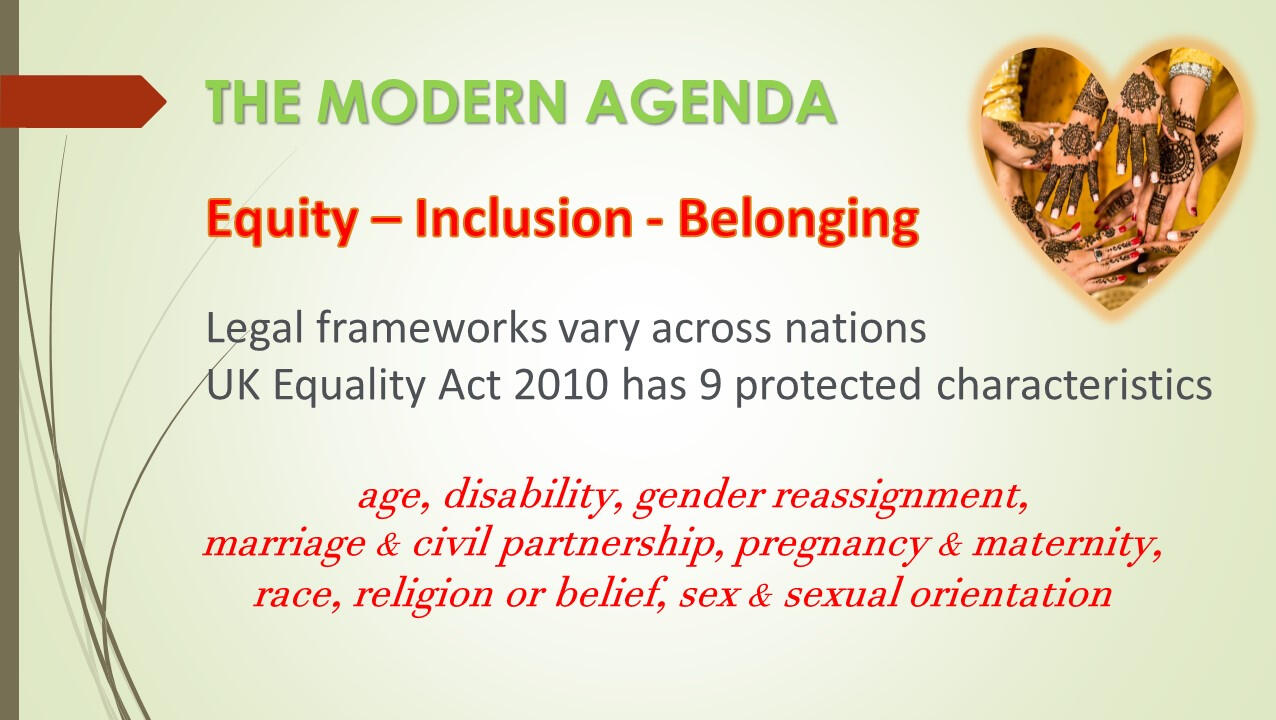
The Modern Agenda
KNOWLEDGE CHECK
Here, you can take part in the interactive part of the course. In order to share your input with us, you will need to log in to your Gmail account ⬇️
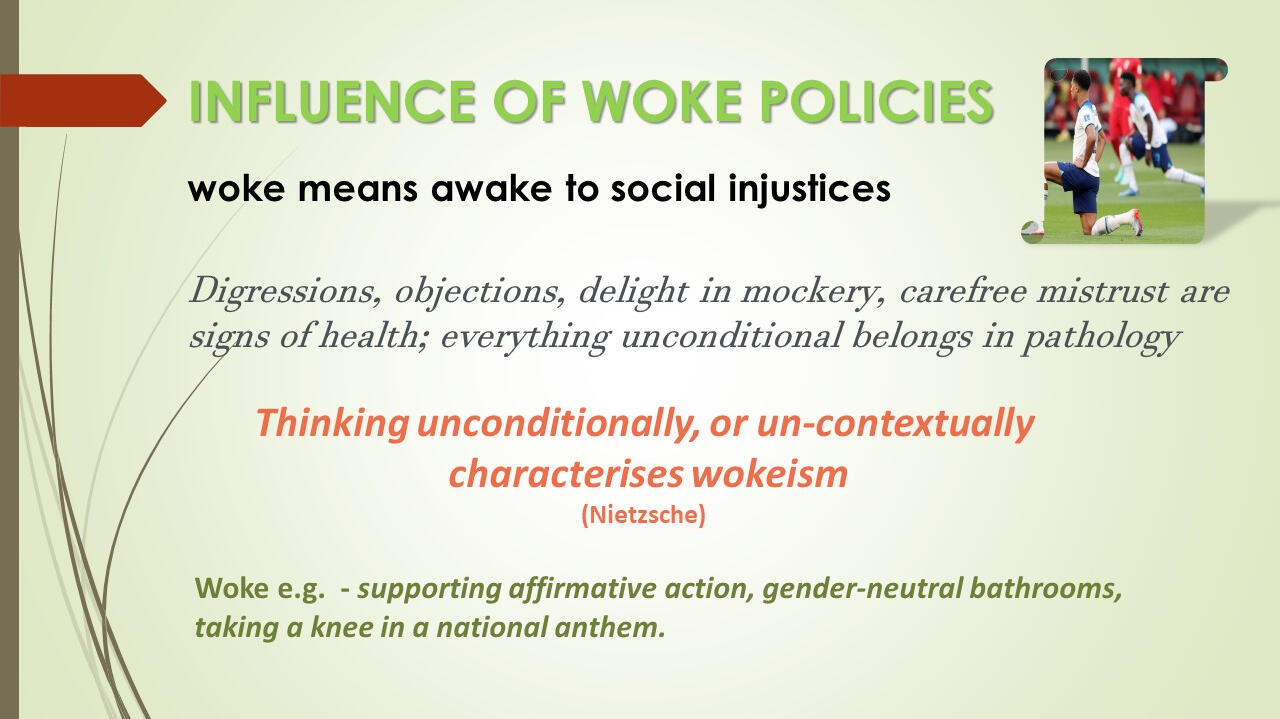
The Influence of Woke Policies
Think of people you know with mental health problems, and find out what these are & why they have occurred (Levels, 2, 3, 4)
Give an example of woke policy and practice from your experience, and reflect on the result (Levels 2, 3, 4)
What are the advantages of the worldwide Educational Robotics Programme, which assists intercultural communication (Levels 5, 6)
How could the capability approach influence diversity policy? Discuss and give your views (Levels 5, 6)
Describe a workplace/organisation in terms of a micro, meso, exo, macro and chrono system (Levels 7, 8)
What are the advantages of the Bildung system for learning? (Levels 7, 8)
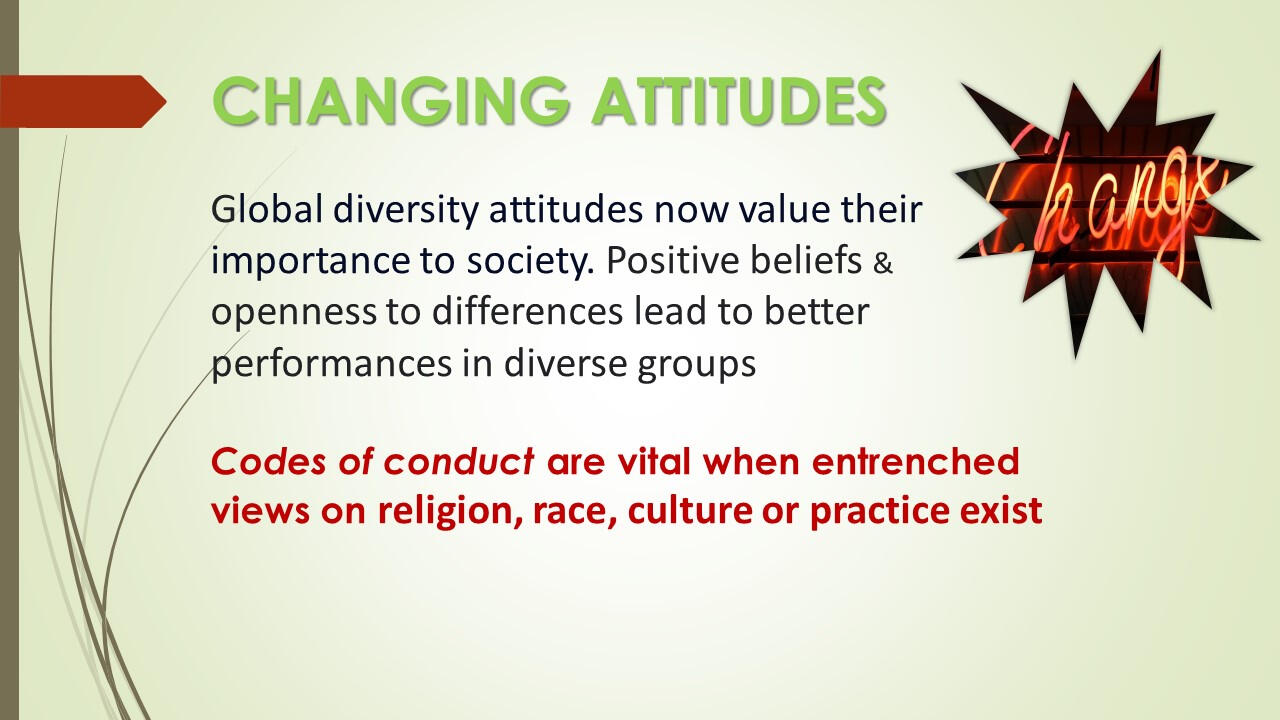
Changing Attitudes
Ask someone what they have learnt from a course of study, and record in some way (poster/audio/interview etc.) Levels 2, 3, 4)
Create a plan to change an approach to a problem/issue that is needed (Levels 2, 3, 4)
Devise questions (not more than 5) to ask 10 colleagues what helped them change their mind about something important (Level 5,6)
Record a case study of your own change of attitude to something in your life and explain the reasons for this (Levels 5, 6)
Observe a training approach and assess intrinsic and instrumental values demonstrated (Levels 7, 8)
Examine Just World Theory in a context known to you. (Levels 7, 8)
Module 2: ROLE OF PHILOSOPHY IN DIVERSE CULTURES
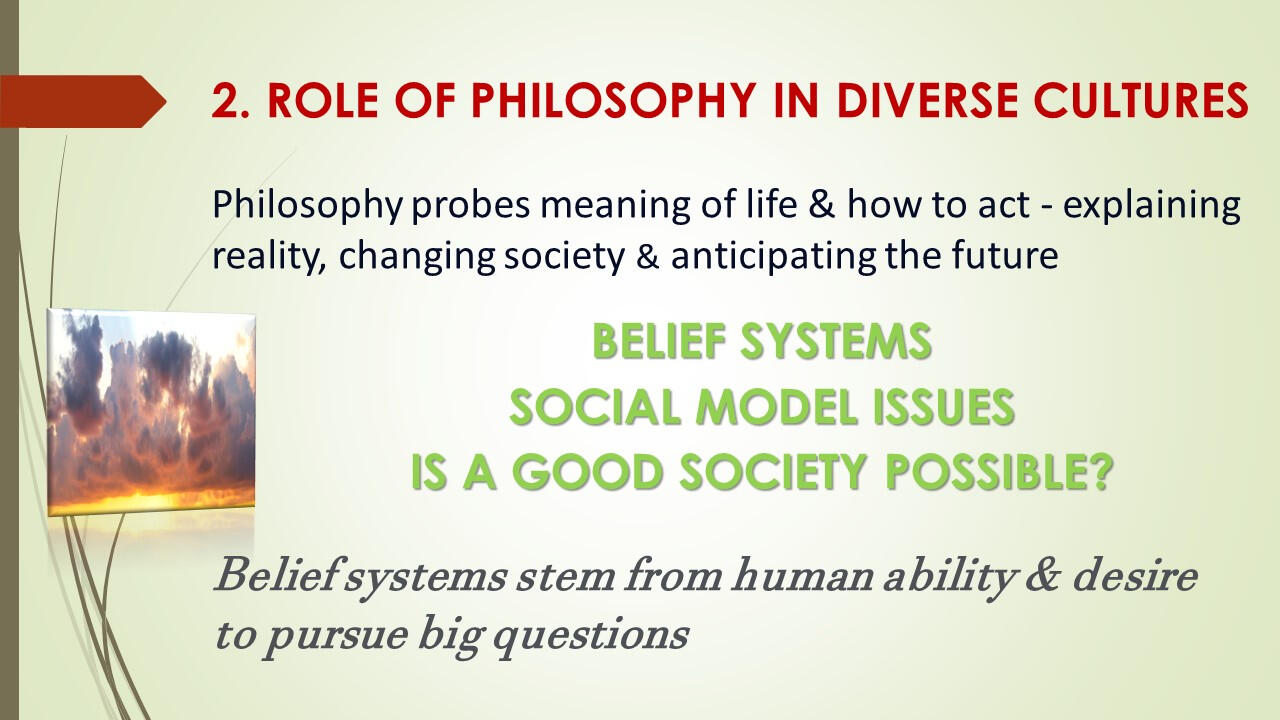
Diverse populations promote new ideas and practices and philosophy aids their understanding and acceptanceStudying philosophy (the fundamental nature of knowledge, reality & existence) brings awareness of major figures and developments in world history to apply in all ventures. It involves learning up-to-date techniques and critical, interpretive, and evaluative abilities to answer philosophical questions. Philosophy links with many subjects and its methods can be used across fields. Philosophy study enhances problem solutions, communication, persuasive powers, and imaginative thinking to deepen and extend all learning as seen below:Problem solving - helps analyse concepts, definitions, arguments & problems - deals with organisation of ideas, value queries & basic information extraction - distinguishes subtle differences between views & discovers commonalities in opposing positions - aids synthesising varied views/perspectives into a unified whole.Communication competencies - contribute uniquely to imaginative expressive, communicative powers - provides basic tools of self-expression - presents ideas in well-constructed, systematic arguments - helps express what is distinctive in views, explain difficult material & eliminate ambiguities & vagueness from communication.Research methods - contribute to framing hypotheses - implements research & manages problems - emphasises clear formulation of ideas & problems, selection of relevant data & objective methods for assessing ideas & proposals - develops new directions from new hypotheses & questions generated in research.
Philosophers build on successes & failures of predecessors. Training allows everyone to elicit hidden assumptions & articulate overlooked alternatives. This can persuade people to take unfamiliar views seriously – valuable for intercultural interaction at a time when training/retraining are required by rapid technological changes.
KNOWLEDGE CHECK
This examines the philosophy process and approaches. Content is based on 3 sections of Chapter 2: Role of Philosophy in Diverse Cultures, in the Intercultural Communication Matters course text. Tasks reflect International levels of learning 2-8, and can be completed as accredited prior learning or a qualification at Level 7 (Master of Professional Practice) or Level 8 (Doctor of Professional Practice). If wishing to gain an accredited certificate, it is necessary to complete 1 task from each section at the Level chosen.
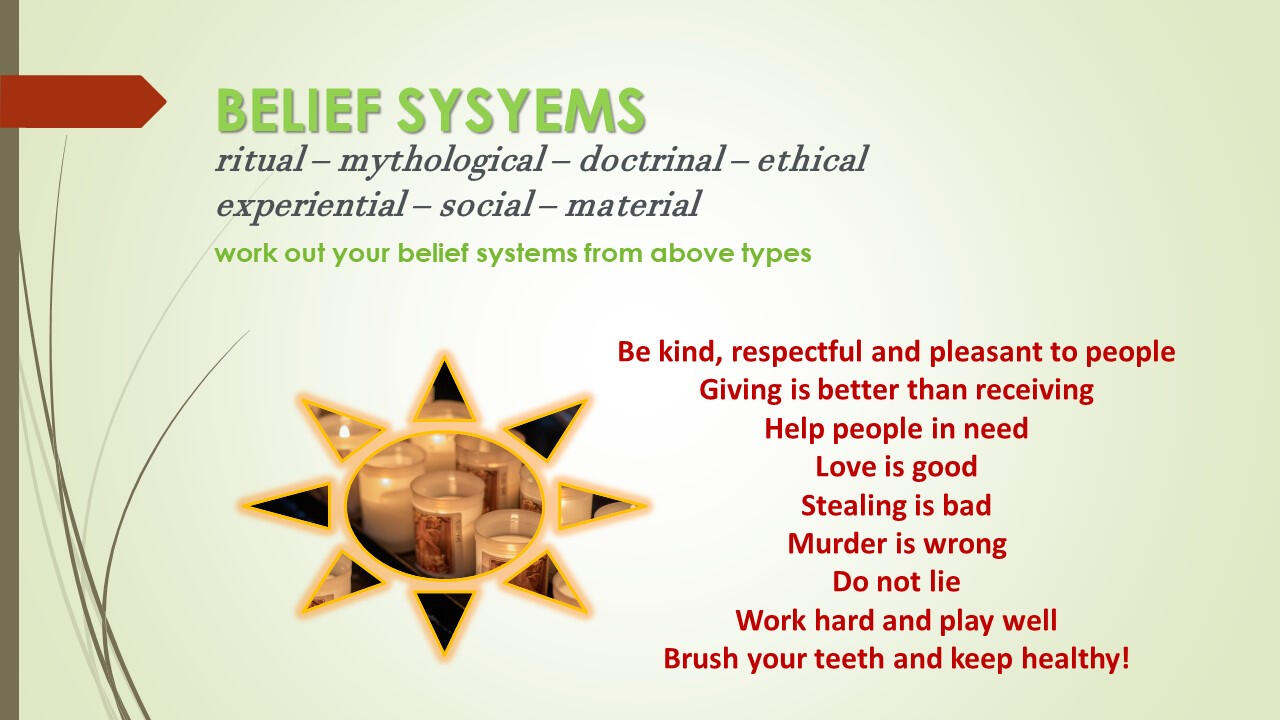
Think of your belief system and consider arguments for and against and reflect on this (Levels 2,3,4)
Compare 2 ethnic cultures and discuss how they might clash (Levels 2,3,4)
Evaluate the arguments for Relativism and Pluralism (Levels, 5,6)
How does an institution that you are familiar with fit with a philosophical theory? (Levels 5,6)
Produce a case history of someone who strongly follows a philosophy and discuss (e.g, Buddhism, Christianity etc.) (Levels 7,8)
Survey 10 people for their list of what Human Rights should comprise and rank them in order (Levels 7,8)
What are the rules in an organisation you are involved in and evaluate these in practice? (Levels, 2,3,4)
Compare a democracy with an autocracy and evaluate them for a diverse society (Levels 2,3,4)
Research the philosophy of Herodotus, the Father of History, and evaluate his contribution to diverse thinking (Levels 5,6)
Contrast the 10 Commandments in Islam and Christianity and reflect on their implementation (Levels 5,6)
Evaluate the Social Contract Theories of Thomas Hobbes and John Locke (7,8)
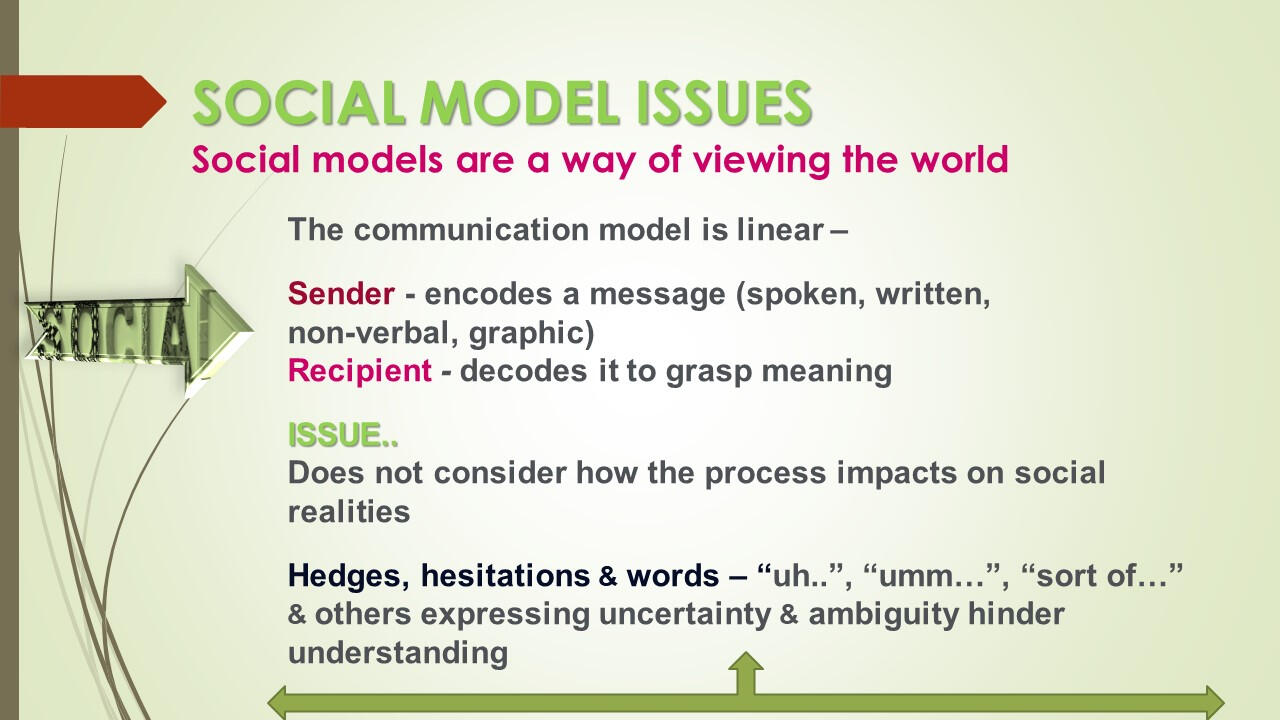
Compare 2 Social Models and discuss their strengths and weaknesses (E.g. Social Model of Disability cf with Social Model of Health (7.8)
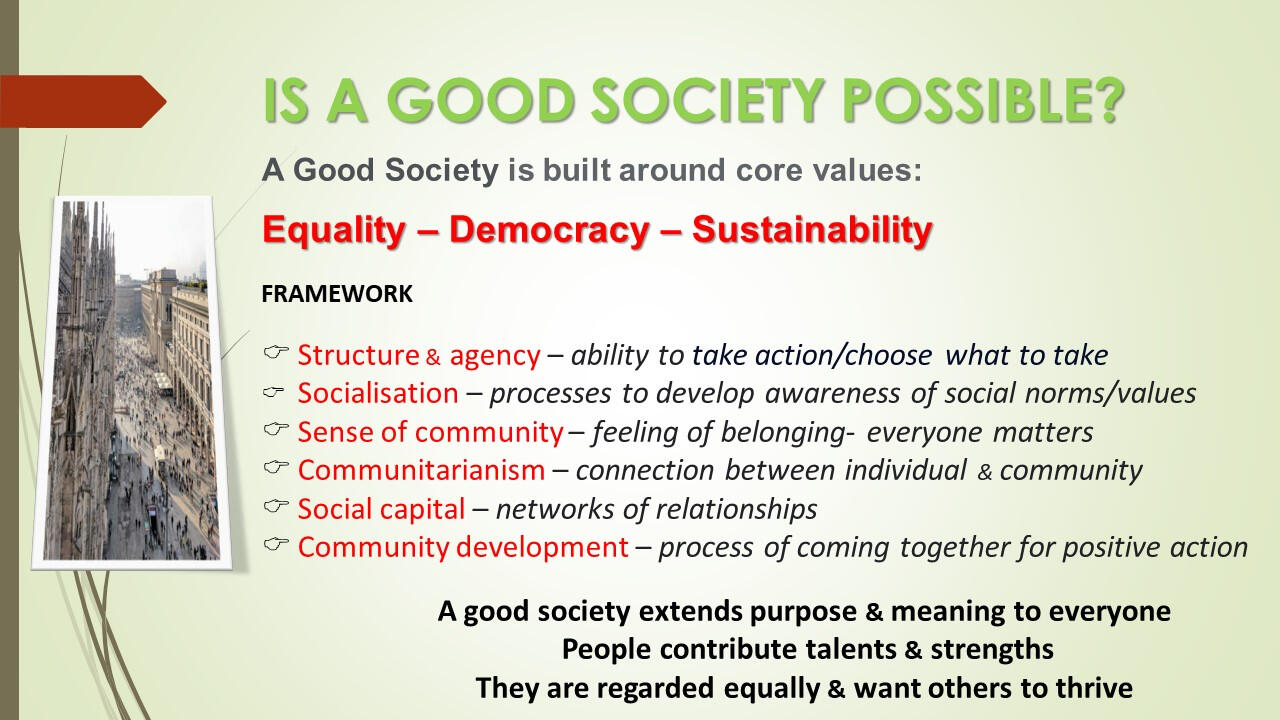
Is a Good Society Possible?
Define a “Good Society” and give an example (2,3,4)
What did John Stuart Mill, the philosopher, contribute to the ideas of a “Good Society”? (Levels 2,3,4)
There are 10 top “Good Societies”. What are their similarities and differences? (Level 5,6)
Define “poor life quality” and give an example and discuss (Levels 5,6)
In some societies inclusion is seen as best for a good society while others embrace universalism. Evaluate these models. (Levels 7,8)
Ask 10 people to list their criteria for a good society and rank these for a final discussion (Levels 7,8)
Module 3: CULTURAL COMMUNICATION CHARACTERISTICS
Diverse populations promote new ideas and practices, but challenges must be addressed if conflicts are to be minimisedThe characteristics of intercultural communication include empathy, knowledge, open-mindedness, patience and tolerance. It requires both the sender and receiver to understand and respect the reality of differences and a willingness to learn the best ways to improve communication. Darla Deardorff's Intercultural Competence Model (2006) is based on 5 elements: attitude, knowledge, internal - external outcomes & abilities. Intercultural communication requires both sender & receiver to understand & respect the reality of differences with willingness to learn ways to improve communication. It must cope with Denial, Defence, Minimisation. Acceptance, Adaptation & Integration demonstrating:Ability to function across cultures - requiring knowledge and competence in intercultural communication issues
Think & act appropriately – demanding a flexible approach and understanding of cultural differences so as not to offend
Understand differences – coming from study and experience with the will to learn
Open-minded & tolerance – resulting from free thinking and difficult in Britain with an education curriculum focusing on the fixed mode
KNOWLEDGE CHECK
This examines the diversity process and approaches. Content is based on 3 sections of Chapter 3: Cultural Communication Characteristics, in the Intercultural Communication Matters course text. Tasks reflect International levels of learning 2-8, and can be completed as accredited prior learning or a qualification at Level 7 (Master of Professional Practice) or Level 8 (Doctor of Professional Practice). If wishing to gain an accredited certificate, it is necessary to complete 1 task from each section at the Level chosen.
The Communicative Process
Describe a conversation with someone from another culture and reflect on how your felt about the experience (Levels 2,3,4)
Ask an immigrant their views about communicating with a new culture and reflect on these (Levels 2,3,4)
Observe a conversation and locate the processes involved (Levels, 5,6,)
Critically review an article/book chapter on the communication process (Levels 5,6)
Review 2 conversations against the communicative process and discuss (Levels 7,8)
Write a short literature review (5,000 words) on the topic of the communication process (Levels 7,8)Cultural Styles Differences
Describe the main cultural style differences and reflect on these (Levels, 2,3,4)
Choose a culture and explain their style of operating (Levels 2,3,4)
Compare a dialect with the standard form of a language and reflect on these (Levels 5,6)
Read an article on cultural styles and critically review it (Levels 5,6)
Interview a group of people and ask them for their views on cultural styles and review similarities and differences (Levels 7,8)
Prepare a handout for a talk that you will give to an audience on “The Challenges of Different Cultural Styles” (Levels 7.8)Working with Different People
Describe the Spitzberg & Changnon (2009) model for working with different people, and reflect on it (Levels 2,3,
Evaluate your interactions with people different form you & give examples of how to alter style to suit the context (Levels 2,3,4)
Choose 3 models that are used in intercultural settings and discuss their pros and cons (Level 5,6)
Produce a handout for a course that outlines how to interact successfully with other cultures (Levels 5,6)
Discuss models of communicating across cultures and elicit their strengths and challenges (Levels 7,8)
Design a course outline to teach successful communication between different people (Levels 7,8)
To gain a Certificate in Professional Studies, you need to study 2,3,4 courses
To gain a Higher Certificate in Professional Studies, you to need to study 5,6 courses
To gain a Masters Certi+ficate in Professional Studies, you need to study 7 courses
To gain a Doctors Certificate in Professional Studies, you need to study 8 courses
Module 4: DEALING WITH DIFFERENCES
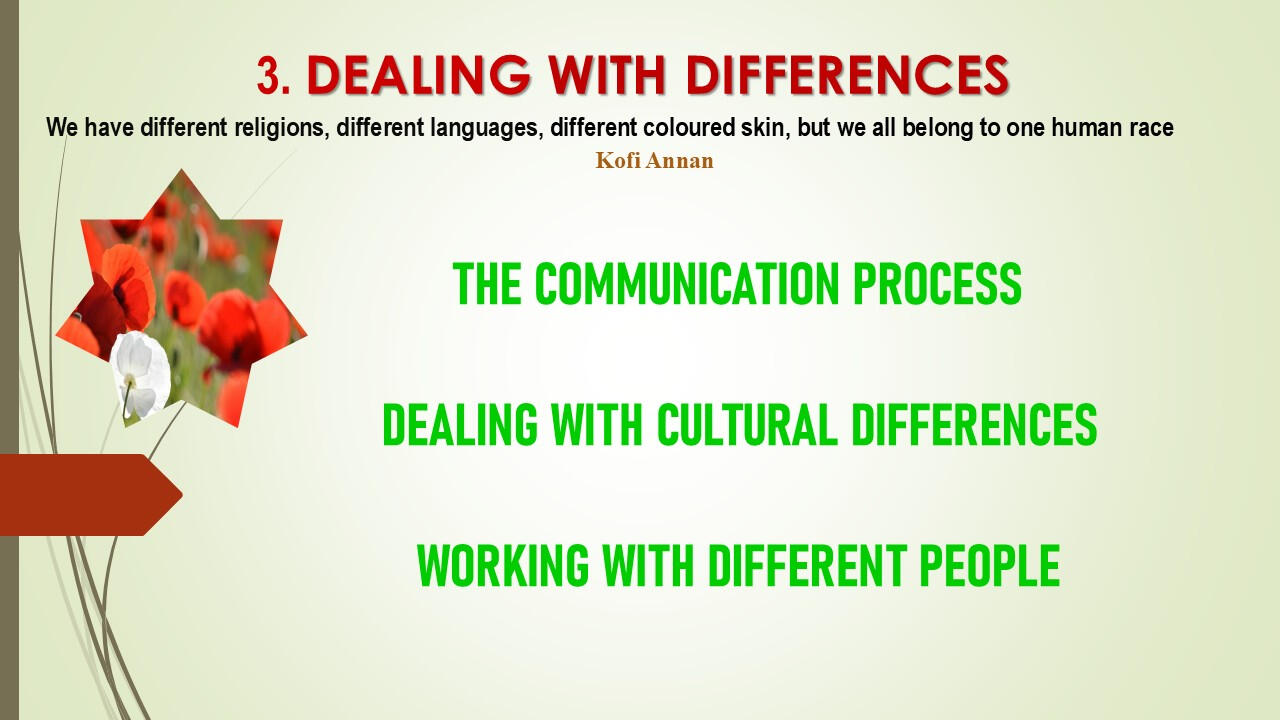
Diverse populations promote new ideas and practices and philosophy aids their understanding and acceptanceDealing with people differences is one of the major challenges facing individuals who live with different life styles, as well as those who provide community services. Strategies like assimilation or monoculturation, acculturation, alternation, integration, separation, and fusion help people to cope with cultural diversity. The relationship between ecosystemic models of culture (complex systems influencing human development), and social cognitive theories (dynamic, reciprocal interactions) are presented. Strategies below affect the process of coping with diversity:Communication – easy-to-understand policies & ethos that everyone is aware of & easy to interpret - check ambiguities, accountability, misunderstandings & inequalities, otherwise resentment will breed to fuel a "them" and "us" environment.
Culture - recognise people as individuals and not stereotypes - arrange relationship-building exercises.
Differences – religions have different taboos - people with various challenges may need extra consideration like access to buildings, certain chairs or computer screens - be aware and sensitive as a sign of respect.
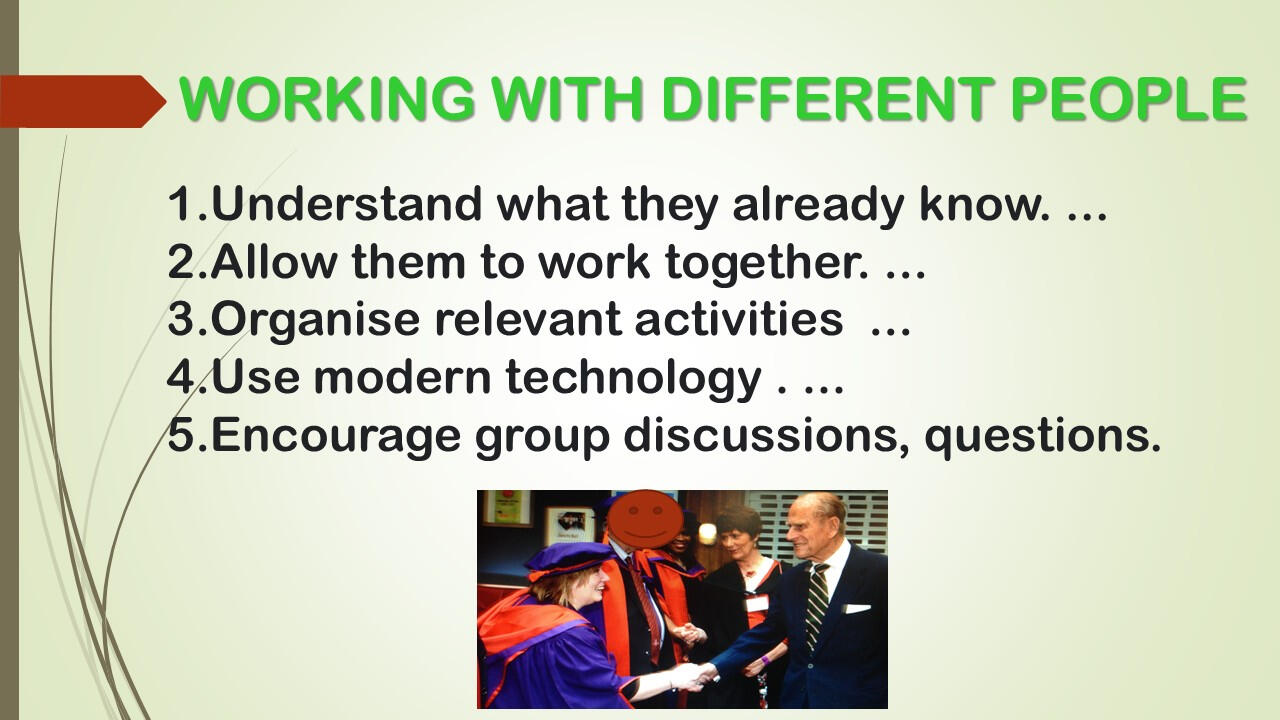
Discussion groups - with each member explaining what it is like being in a certain sector; a different cultural or social background; or living with impairment - lack of understanding feeds discrimination.
Diversity as norm – is argued so differences are irrelevant and unnecessary to consider - the reality is that we are only human and celebrating differences leads to improved harmony - respect, tolerance & compassion copes effectively with diverse populations.
KNOWLEDGE CHECK
This examines the philosophy process and approaches. Content is based on 3 sections of Chapter 3: Dealing with Differences, in the Intercultural Communication Matters course text. Tasks reflect International levels of learning 2-8, and can be completed as accredited prior learning or a qualification at Level 7 (Master of Professional Practice) or Level 8 (Doctor of Professional Practice). If wishing to gain an accredited certificate, it is necessary to complete 1 task from each section at the Level chosen.
Communication in Practice
Take a dialect of your language and compare with the standard form (Levels 2,3,4)
Observe people who speak different mother-tongues and note the problems that arise (Levels 2,3,4)
What are the arguments for a Standard Language Form (Levels, 5,6,)
Reflect on your personal difficulties in coping with different ways of communicating (Levels 5,6)
Interview a person with a dialect and investigate their issues in making others understand them (Levels 7,8)
Using the framework of Form, Content & Use of Speech – evaluate a dialect you know. (Levels 7,8)Dealing with Cultural Differences
How does an organisation you know cope with cultural styles amongst members? Describe & discuss (Levels, 2,3,4)
Compare the dressing styles of two distinctive cultures (Levels 2,3,4)
Discuss the benefits of cultural variations to an organisation (Levels 5,6)
Reflect on the things you like and dislike about cultural differences (Levels 5,6)
Develop a case study of an immigrant to your country outlining the problems of coping with different lifestyles (7,8)
Compare the cuisine and art of 2 countries and discuss their origins (7.8)Social Patterns
Describe some of the problems of a traditional education for the modern world ( 2,3,4)
Present ideas for teaching a diverse group of people (Levels 2,3,4)
Flipped classrooms using technology input are an increasing social learning pattern. Evaluate the issues for implementation (Level 5,6)
Select an article on the topic of social patterns and changing education and critique it (Levels 5,6)
Create a survey to teachers to assess their views on changes needed for a diverse population (Levels 7,8)
Observe a mixed class of learners and evaluate the strengths and weaknesses of the teaching approach (Levels 7,8)
To gain a Certificate in Professional Studies, you need to study 2,3,4 courses
To gain a Higher Certificate in Professional Studies, you to need to study 5,6 courses
To gain a Masters Certificate in Professional Studies, you need to study 7 courses
To gain a Doctors Certificate in Professional Studies, you need to study 8 courses
Module 5: THINKING AND LANGUAGE
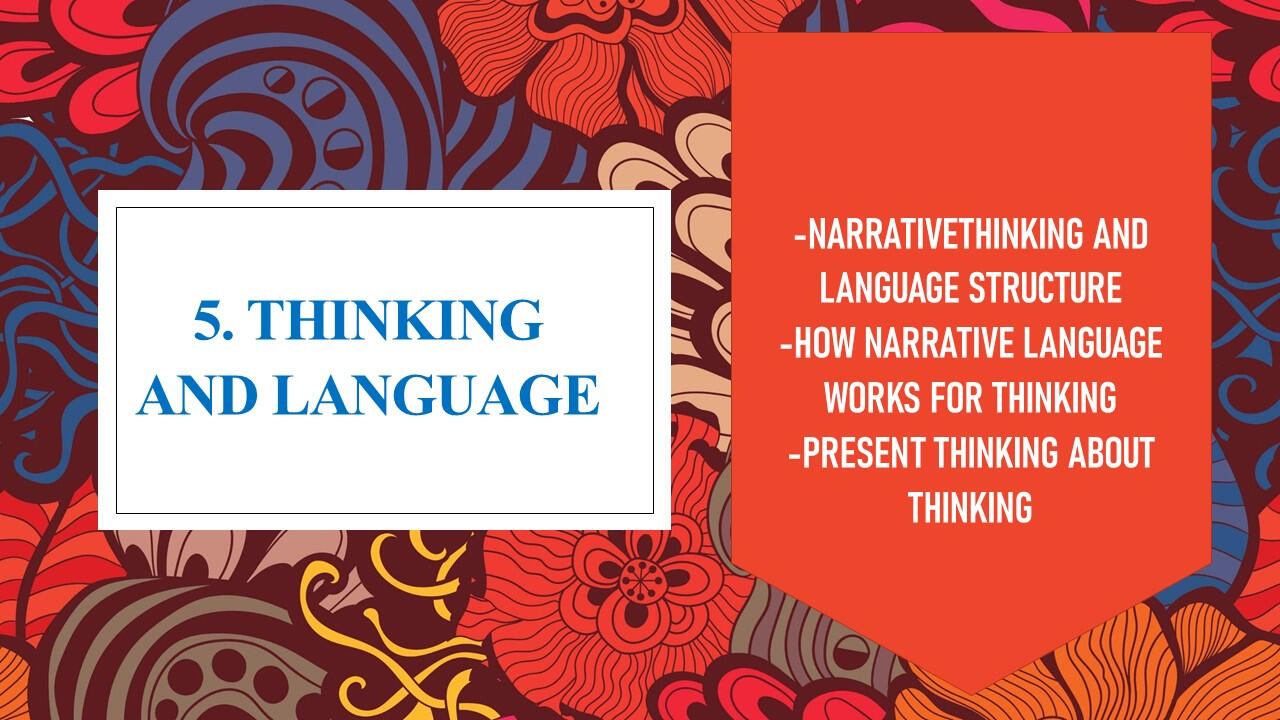
Diverse populations promote new ideas and practices, but challenges must be addressed if conflicts are to be minimisedThere are different kinds of thought: verbal, positive, negative, analytical, constructive, destructive, abstract and symbolic. Each type has its own unique benefits and drawbacks. To develop thinking:Develop a free mindset - not a fixed one. This allows for learning from mistakes and helps prevent repetition, as a fixed one inhibits creative problem solving
Think in degrees - not polarised either/or conclusions. An act may be good, bad or both - good in one way but bad in another.
Think reflectively - problems may have several starting points and many ways to solve them. To prevent faulty, partial reasoning and cognitive biases, fully evaluate problems and possible solutions.
KNOWLEDGE CHECK
This examines models for teaching communication. Content is based on 3 sections of Chapter 8: Thinking about Thinking and Language, in the Intercultural Communication Matters course text. Tasks reflect International levels of learning 2-8, and can be completed as accredited prior learning or a qualification at Level 7 (Master of Professional Practice) or Level 8 (Doctor of Professional Practice). If wishing to gain an accredited certificate, it is necessary to complete 1 task from each section at the Level chosen.
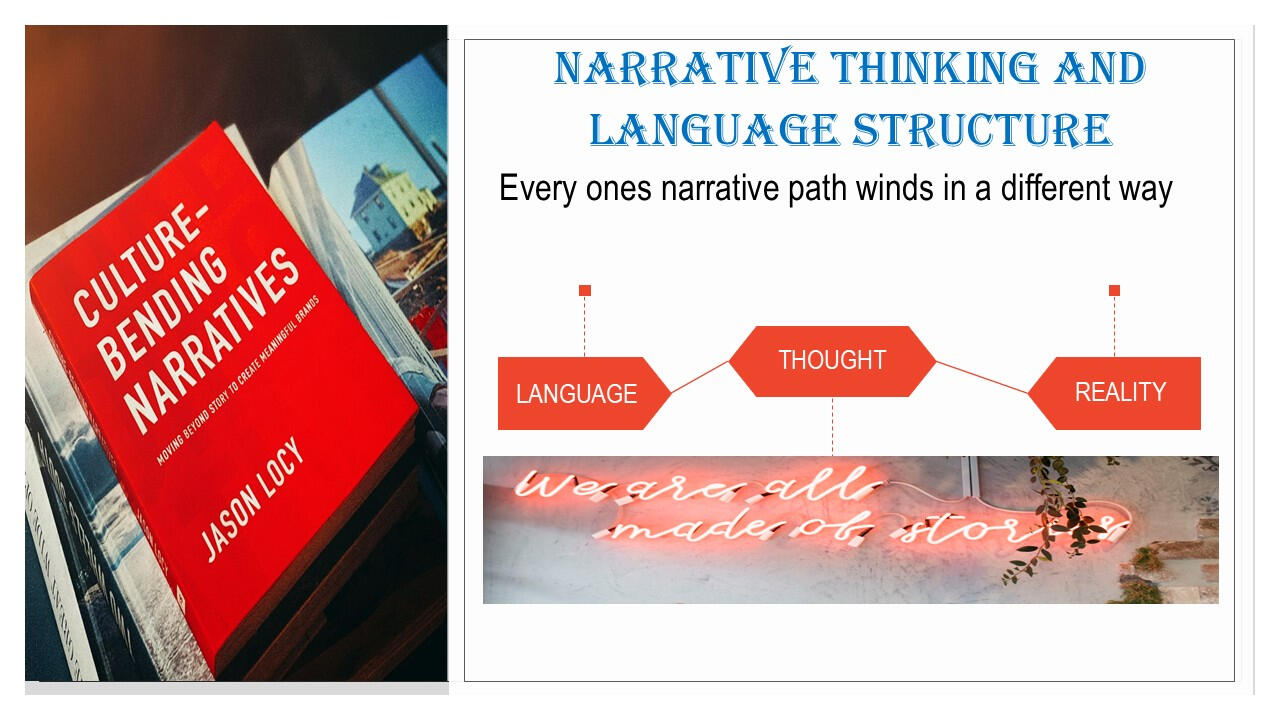
Narrative Thinking and Language Structure
Reflect on your response to problems in a day. Which depended on fixed thinking as opposed to the free type (Levels 2,3,4)
Take a problem that needs solving and analyse the thinking types involved (Levels 2,3,4)
Verbal, positive, negative, analytical, constructive, destructive, abstract & symbolic thoughts occur. Choose a type to discuss (Levels, 5,6,)
In a case study, give a subject a problem to solve and record and reflect on their solution (Levels 5,6)
Limited narrative language means limited self-talk. How does this affect thinking? Critically discuss (Levels 7,8)
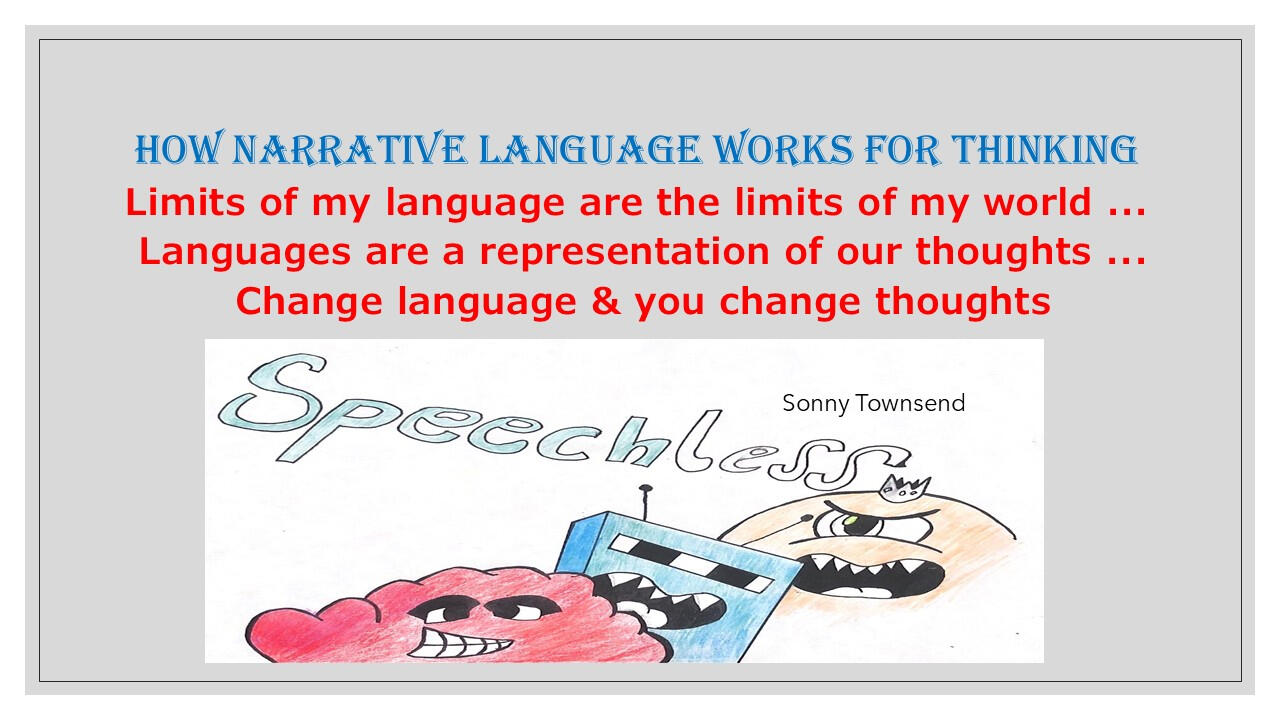
Devise a task to assess thinking for either a child or adult - implement this and evaluate (Levels 7,8)How Narrative Language Works for Thinking
Try the “Places Trick” and record the reflections of a subject/s (Levels, 2,3,4)
Why does narrative language ability help thinking? Discuss the benefits (Levels 2,3,4)
Devise a plan to develop narrative speaking and thinking, to implement and reflect on results (Levels 5,6)
Describe and discuss the Theory of Narrative Thinking (Levels 5,6)
Ask a group of subjects about their knowledge of Narrative Thinking and reflect on the results (7,8)
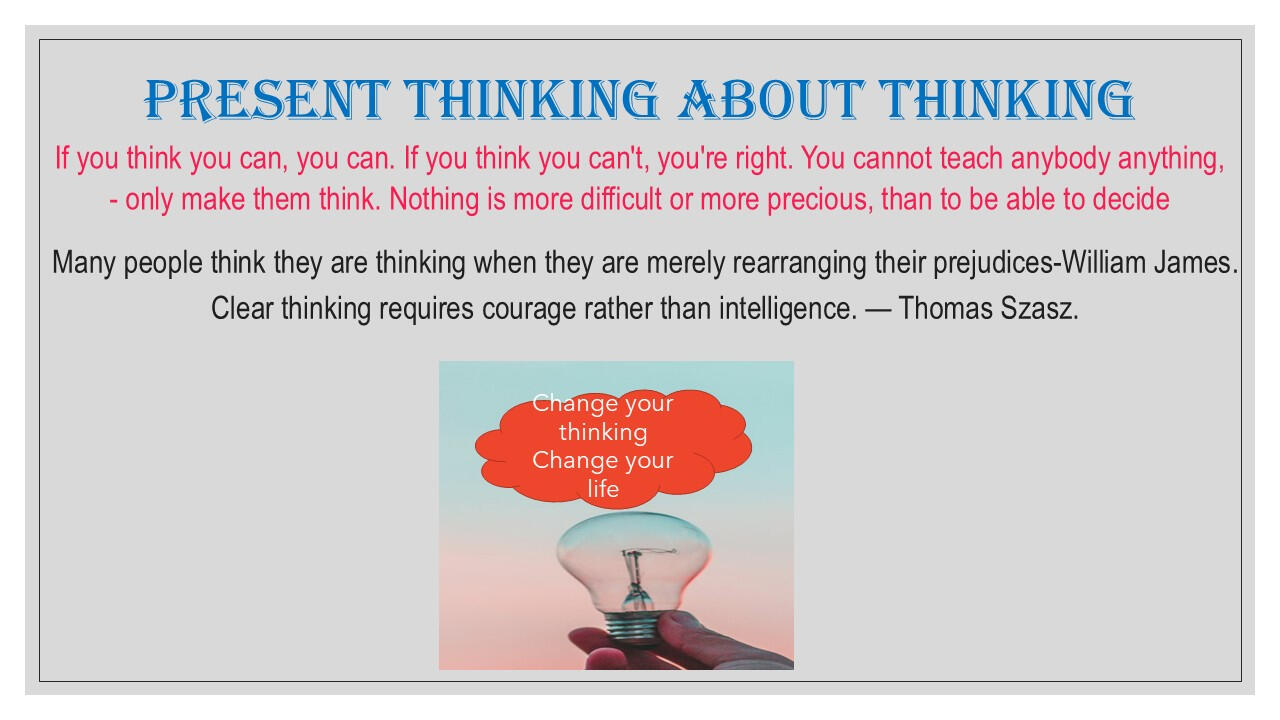
Critically evaluate an article about narrative thinking and language (7.8)Present Thinking about Thinking
Make a poster to promote narrative thinking problems for a particular setting Levels 2,3,4)
Identify your own problems with thinking, and describe how you would solve them? (Levels 2,3,4)
Plan and implement some activities to develop thinking, and evaluate the results (Level 5,6)
Choose an article on language and thinking to critically evaluate (Level 5,6)
Carry out a project to look at “bias” in thinking activities (Levels 7,8)
Using the Communication Opportunity Group model, carry out a session using this and evaluate (Levels 7,8)
To gain a Certificate in Professional Studies, you need to study 2,3,4 courses
To gain a Higher Certificate in Professional Studies, you to need to study 5,6 courses
To gain a Masters Certificate in Professional Studies, you need to study 7 courses
To gain a Doctors Certificate in Professional Studies, you need to study 8 courses
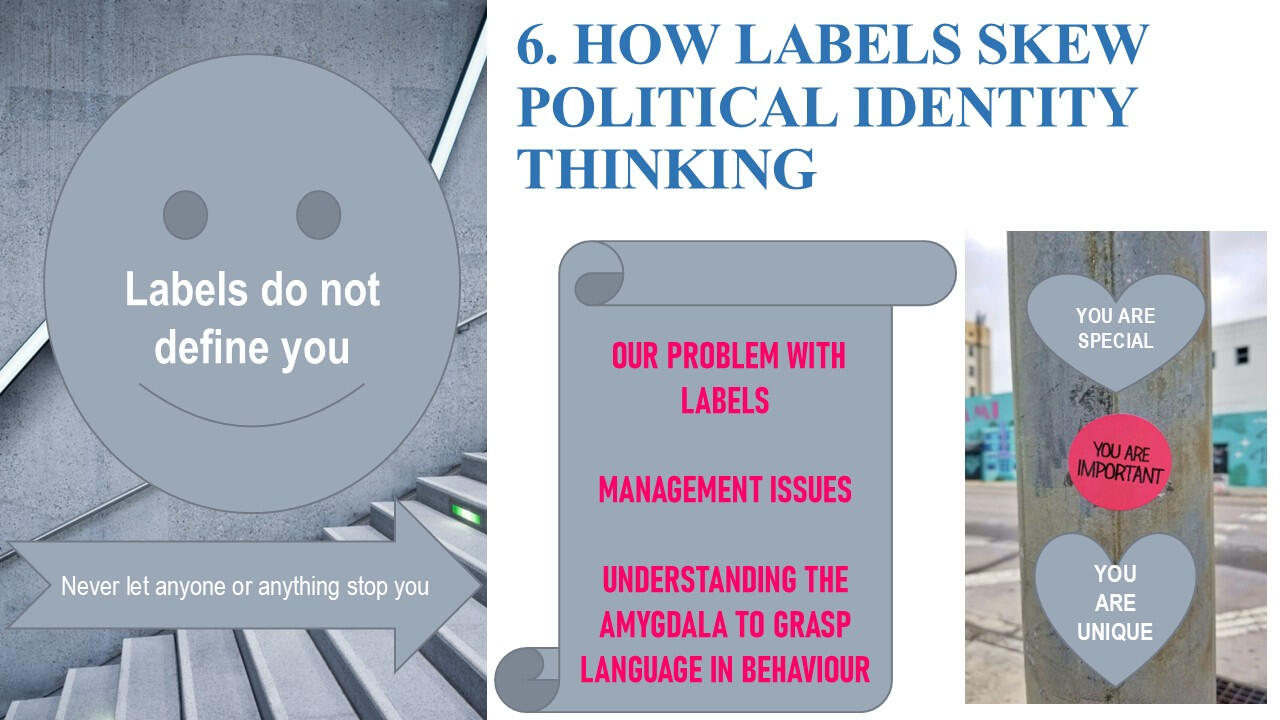
Module 6: HOW LABELS SKEW POLITICAL IDENTITY THINKING
Diverse populations promote new ideas and practices, but challenges must be addressed if conflicts are to be minimised
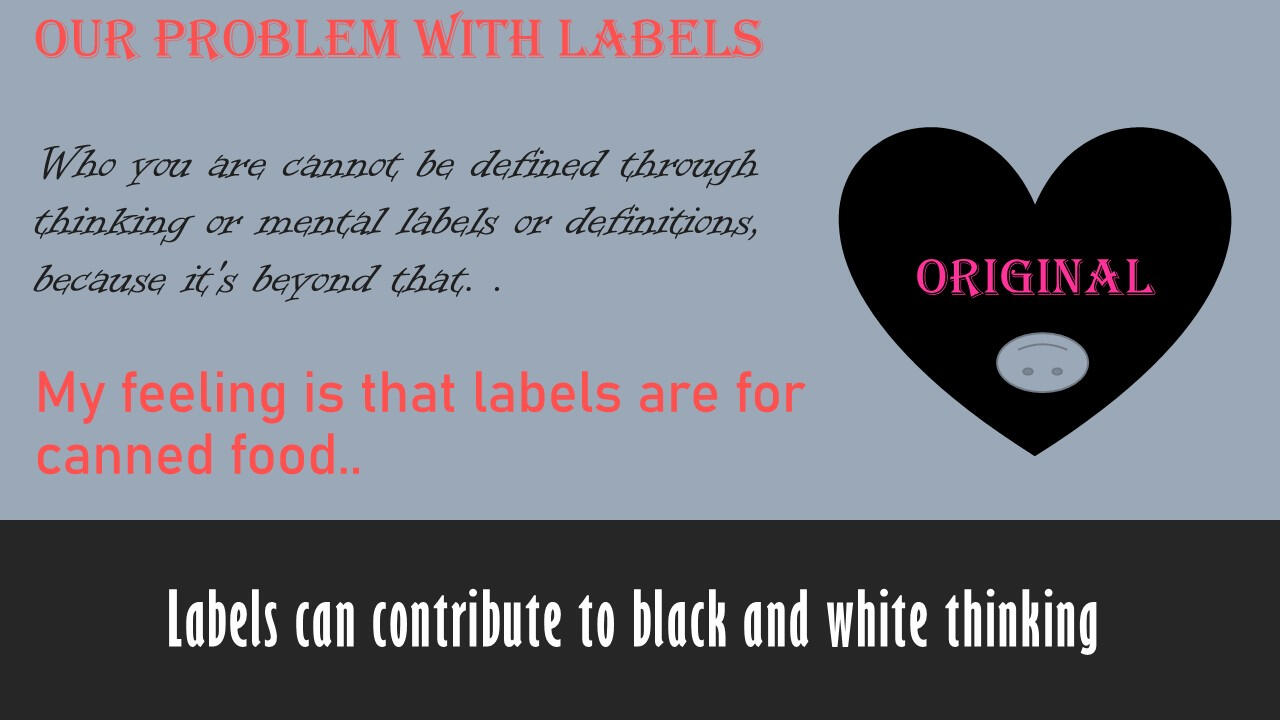
Labels may seem innocuous, but can be harmful as they may negatively affect our self-esteem and hold us back. Using labels can cause the persistence of negative stereotypes of people. It is helpful to know what the pros and cons of labelling are to make an informed decision in a situation, as presented below:A clear explanation - can be provided by a label and the knowledge it represents
Isolation - can be experienced by being given a label as it signals a difference that might not be acceptable to others
A stigma - can resulted from labelling as people may react to this in a negative way
Expectations - come from a label assignment in terms of potential and behaviour
Accuracy - may not result from labelling as how people perceive is a result of their background knowledge and experience
Restriction - of thinking may result from a label to avoid wider considerations.
KNOWLEDGE CHECK
The Problems with Labels
What are the pros and cons of using labels for people (Levels 2,3,4)
Take a label and define and describe what it means in practice (Levels 2,3,4)
Interview someone who has been given a label and establish whether this helps or hinders their life experiences (Levels, 5,6,)
Survey a group (at least 10 people) to ascertain their problems about labelling and rank the data (Levels 5,6)
Prepare a case study of someone given a label to evaluate their reactions (Levels 7,8)
Articles (available on WWW) evaluate the consequences of using labels. Choose one and critically review it (Levels 7,8)Management Issues
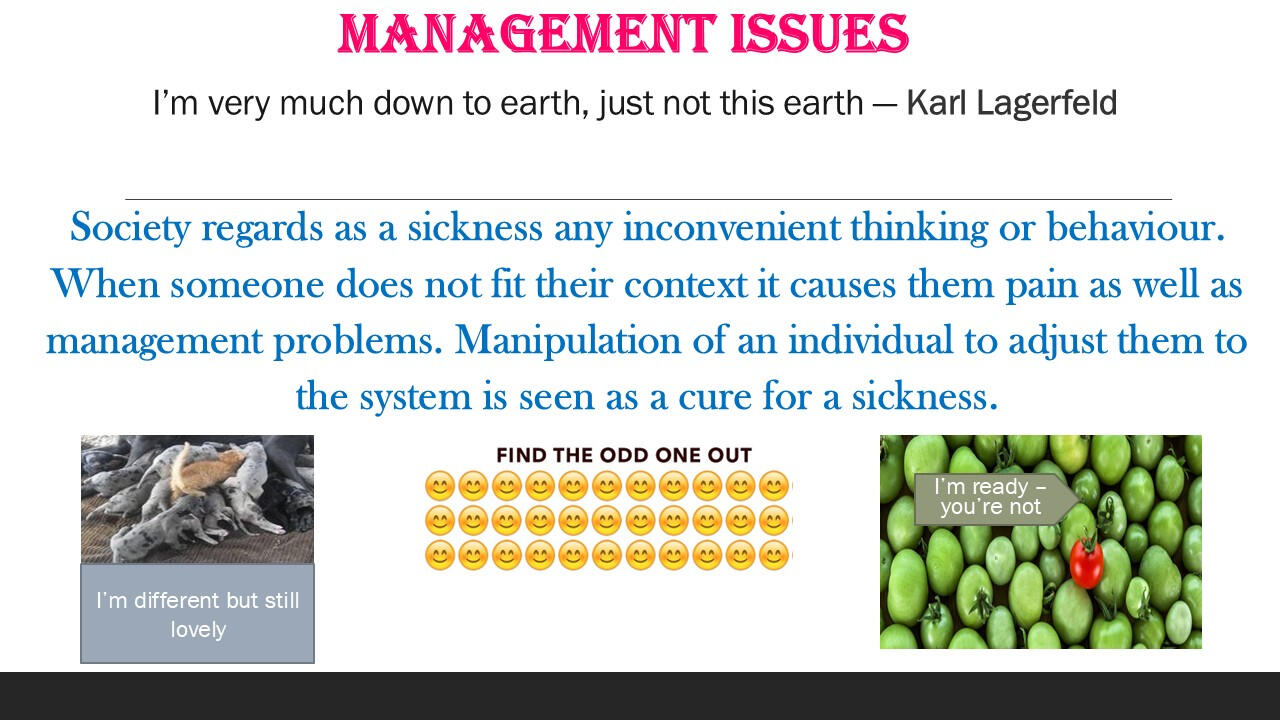
Take someone you know with a label and outline their management in education or workplace (Levels, 2,3,4)
People are often labelled as A,B or C in education/workplaces. How does this affect their management? Discuss (Levels 2,3,4)
Devise a management plan for someone in education/work who has problems with reading (Levels 5,6)
From your experiences, describe the criteria for successful management and evaluate (Levels 5,6)
In a case study, record the management issues brought up by your subject and critically evaluate (7,8)
Compare 2 theories of management for a person having a particular difficulty (e.g. Autism) (7.8)Understanding the Amygdala to Grasp Language in Behaviour
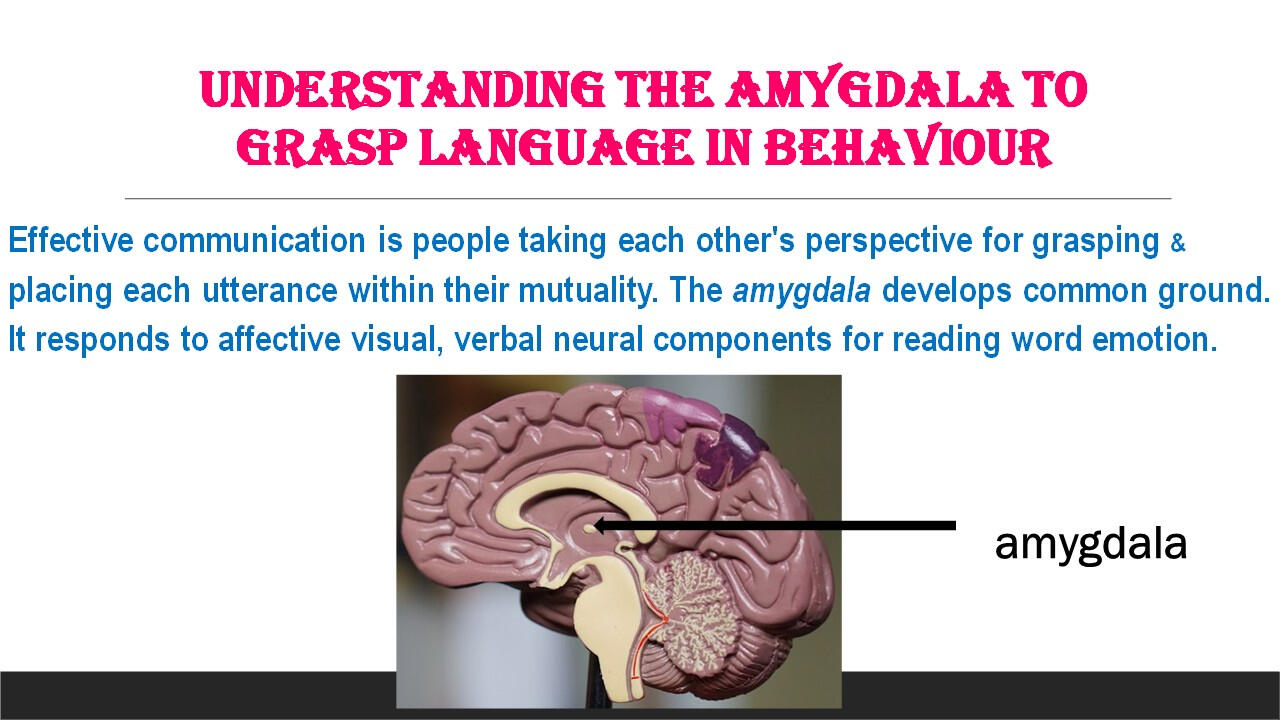
Describe the amygdala and explain how it affects communication (Levels 2,3,4)
Social Communication Disorder (SCD) is poorly understood. Describe the main symptoms (Levels 2,3,4)
Using the 2 halves of the brain together is a common problem. Investigate ways to deal with this (Level 5,6)
Use the Positive, Active, Clear, Energy (PACE) learning system with a person having a labelled condition & evaluate results (Levels 5,6)
Interview a subject who has a label and elicit their communication problems (Levels 7,8)
Choose an article that considers the neurology of people labelled as having problems and discuss this (Levels 7,8)
To gain a Certificate in Professional Studies, you need to study 2,3,4 courses
To gain a Higher Certificate in Professional Studies, you to need to study 5,6 courses
To gain a Masters Certificate in Professional Studies, you need to study 7 courses
To gain a Doctors Certificate in Professional Studies, you need to study 8 courses
Module 7: MISUNDERSTANDINGS IN SOCIETIES
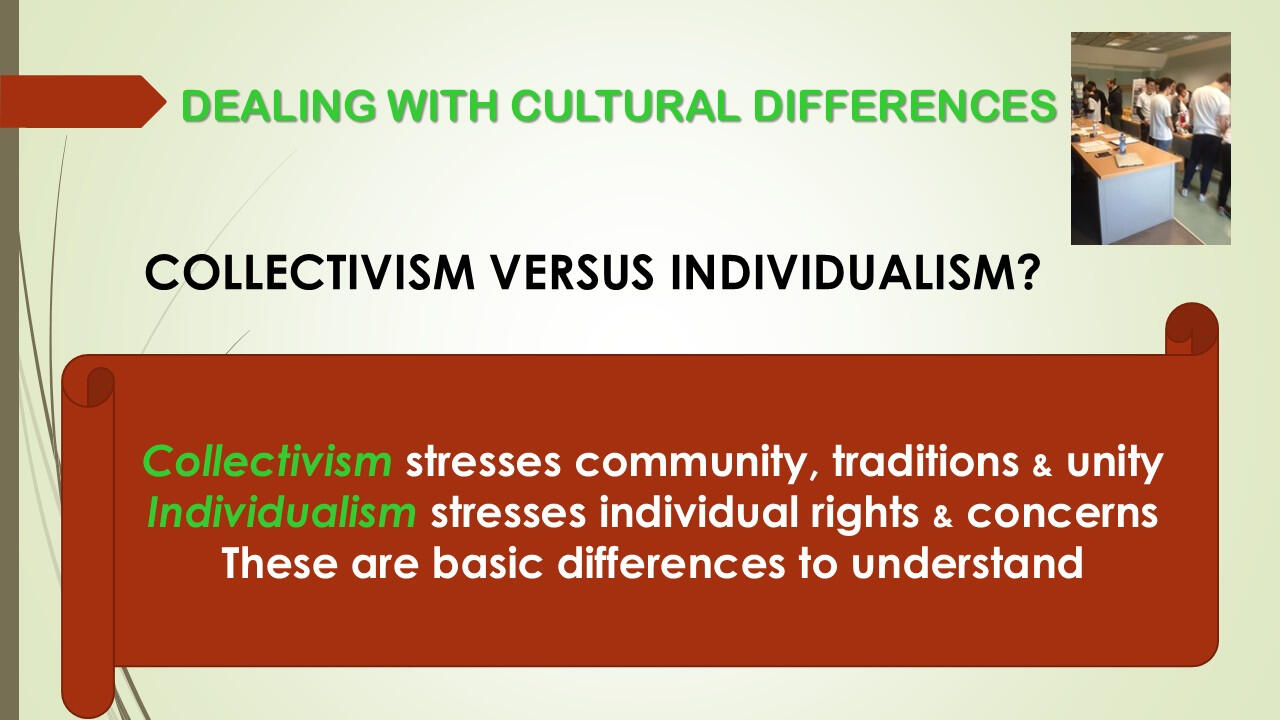
Miscommunication between people from varied linguistic or cultural backgrounds results from differences in values, beliefs, or communication styles. People in some cultures emphasise direct, explicit communication, to express individualism, independence & pride, whereas others use an indirect, implicit manner and collective focus. Ethnocentrism, cultural values & communication style are key, but there are many other factors:Hand gestures - mind body language, especially if in a foreign country have different meanings. The OK sign, with thumbs up is an insult in Iran. In Brazil & France, the thumb & forefinger to create a circle, refers to an offensive gender idea.
Embracing -.Buddhists do not touch heads as they are sacred. In Qatar, men & women are forbidden to embrace publicly. Some nations always hug and kiss relatives, friends and new acquaintances when meeting (France/Italy).
No shoes - in many places you must remove shoes before entering (Masjids, Temples, Houses) for respect & cleanliness. If pointing feet soles to someone it is disrespecting them in Muslim & Arab cultures, so do not cross legs!
Use words carefully – as these can be sharper than a sword to create confusion & awkwardness. Wrong pronunciation causes misunderstanding and one word may have different meanings in different cultures or countries to muddle implications.
KNOWLEDGE CHECK
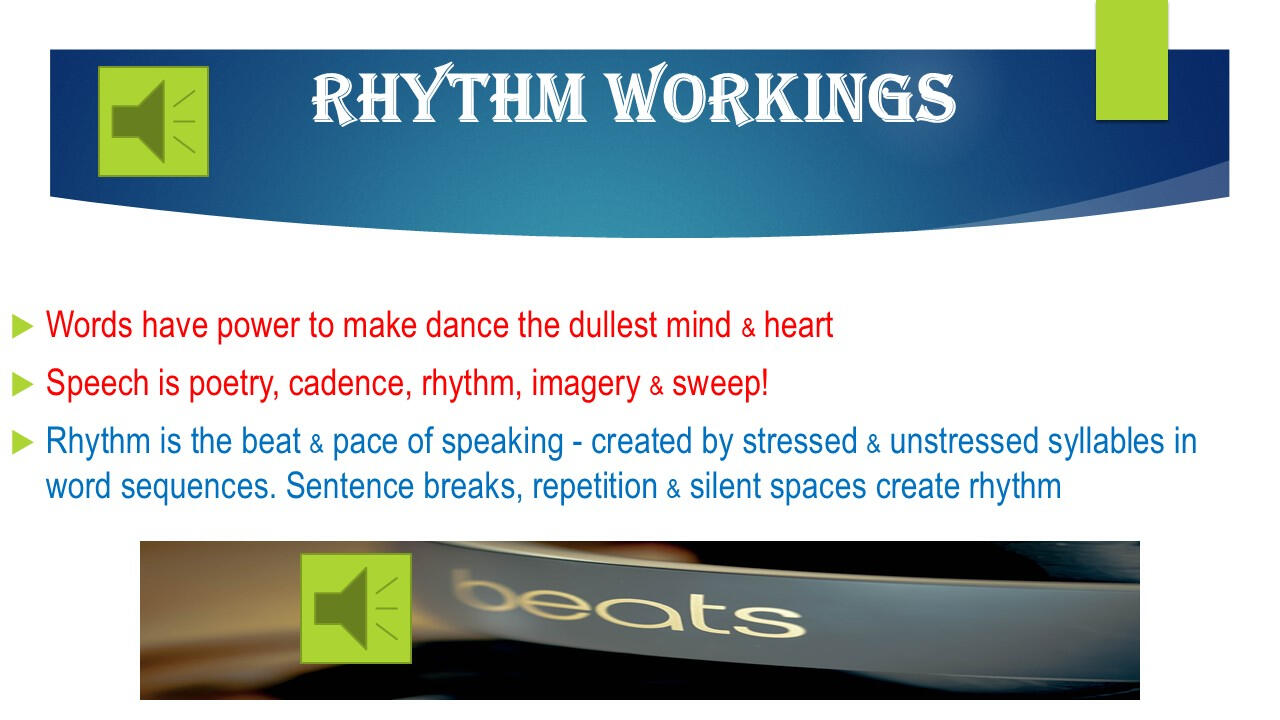
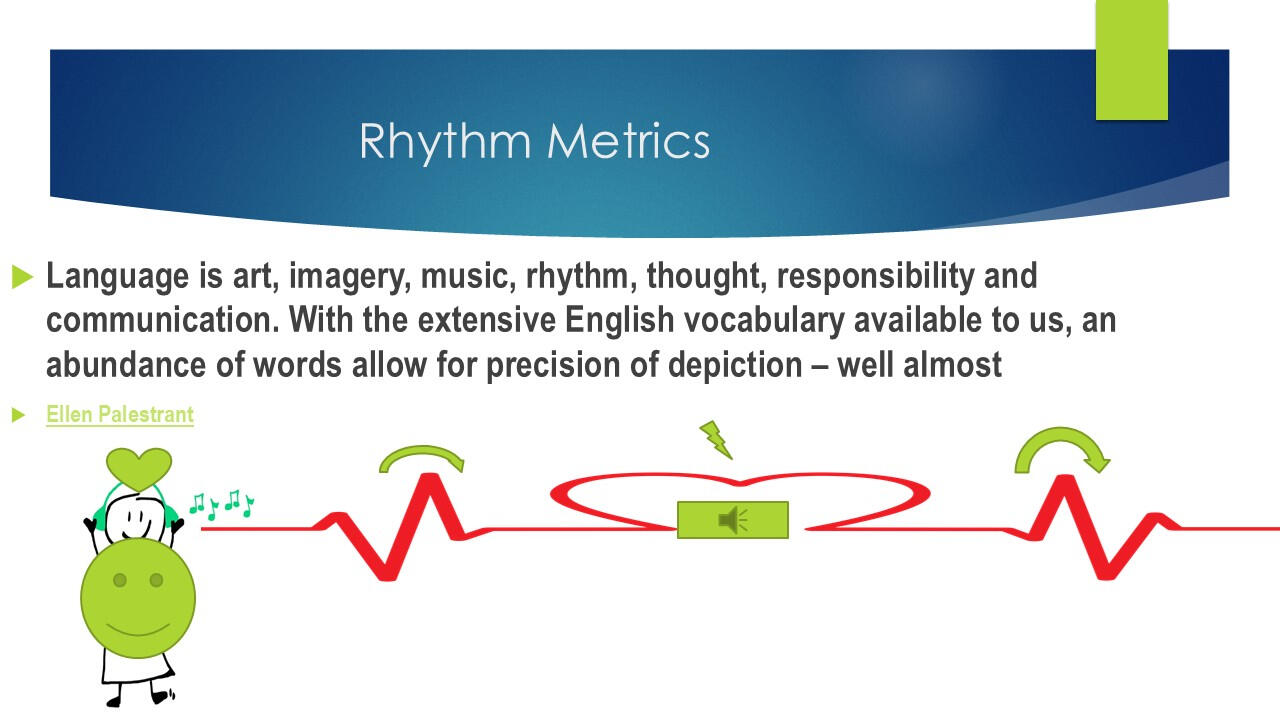
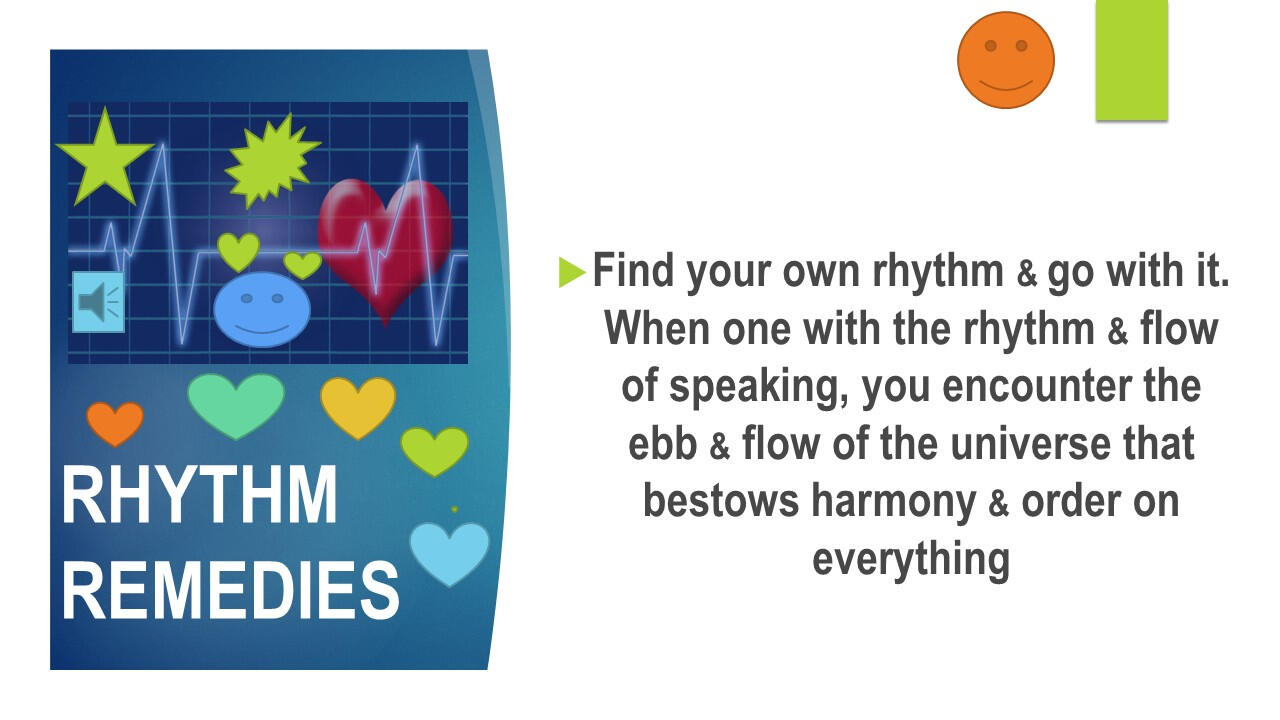
Rhythm Workings Rhythm Remedies
Describe Isochrony, and auditory and acoustic variables, to reflect on them (Levels 2,3,4)
Produce a grid and tree representation of a 4 syllable word and comment on this (Levels 2,3,4)
Read an article on human misunderstandings and critically evaluate it (Levels 5,6,)
Investigate why English has so many pronunciation problems and comment on these (Levels 5,
Devise a sentence for 5 English & 5 foreign mother-tongue speakers to find if said in stress or syllable time is easier to process (Levels 7,8)
Design a survey to discover aspects of speaking a language that are most difficult to understand, and discuss results (Levels 7,8)Rhythm Metrics
List the many English words that have several ways to be articulated, and comment on this phenomenon (Levels, 2,3,4)
Explain VarcoV and nPVI-V, and their implication for language metric (Levels 2,3,4)
Investigate aspects of tricky pronunciation and reflect on them (Levels 5,6)
Discuss the issues regarding speaking pitch levels (Levels 5,6)
Learn one of Shakespeare’s sonnets, and reflect on how it has helped your own speaking (7,8)
Discuss the cognitive aspects of rhythm metrics and how this can be developed (7.8)Rhythm Remedies
Make a poster presentation of some Haiku poems (Levels 2,3,4)
Identify aspects of body language, and how they function in speaking and discuss these (Levels 2,3,4)
Ask a subject/s to describe an object/picture and note the feelings expressed and comment (Levels 5,6)
Evaluate the art and craft of speech training (Levels 5,6)
Observe a conversation and note the positive and negative body language used (Levels 7,8)
“Seeing Voices” is an interprofessional approach to developing speaking. Discuss the method. (Levels 7,8)
To gain a Certificate in Professional Studies, you need to study 2,3,4 courses
To gain a Higher Certificate in Professional Studies, you to need to study 5,6 courses
To gain a Masters Certificate in Professional Studies, you need to study 7 courses
To gain a Doctors Certificate in Professional Studies, you need to study 8 courses
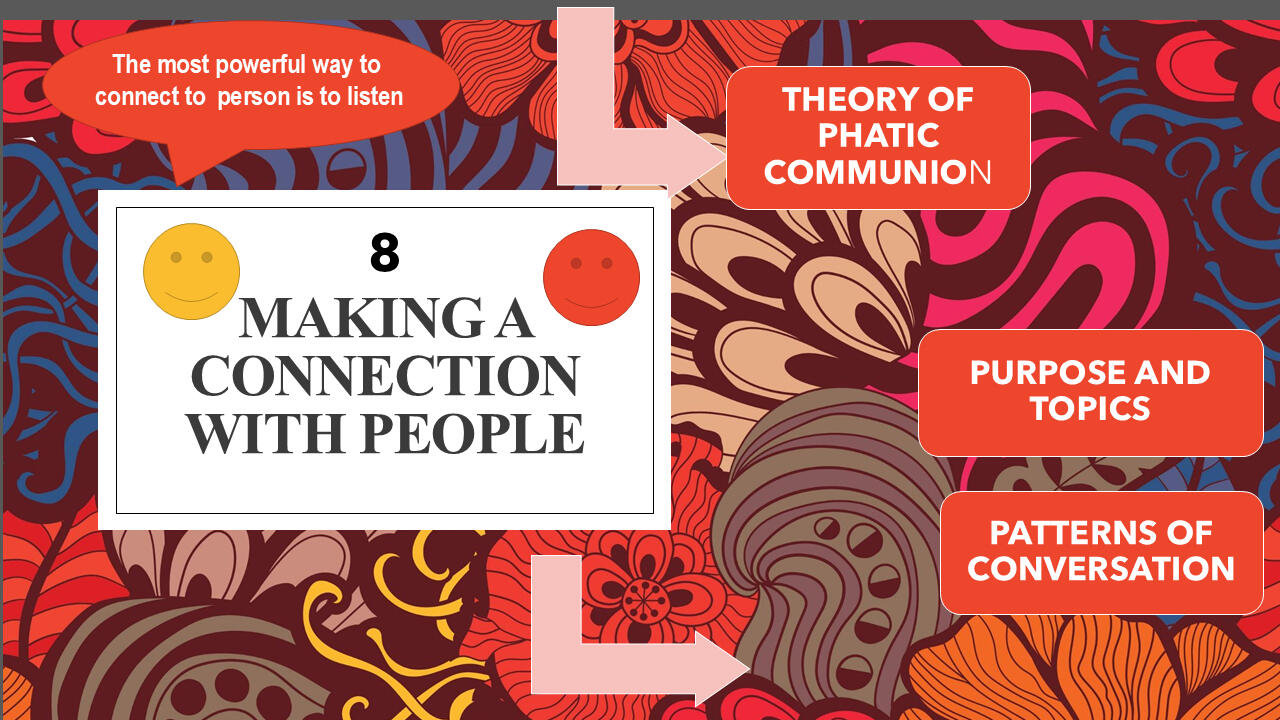
Module 8: MAKING A CONNECTION WITH PEOPLE (PHATICS)
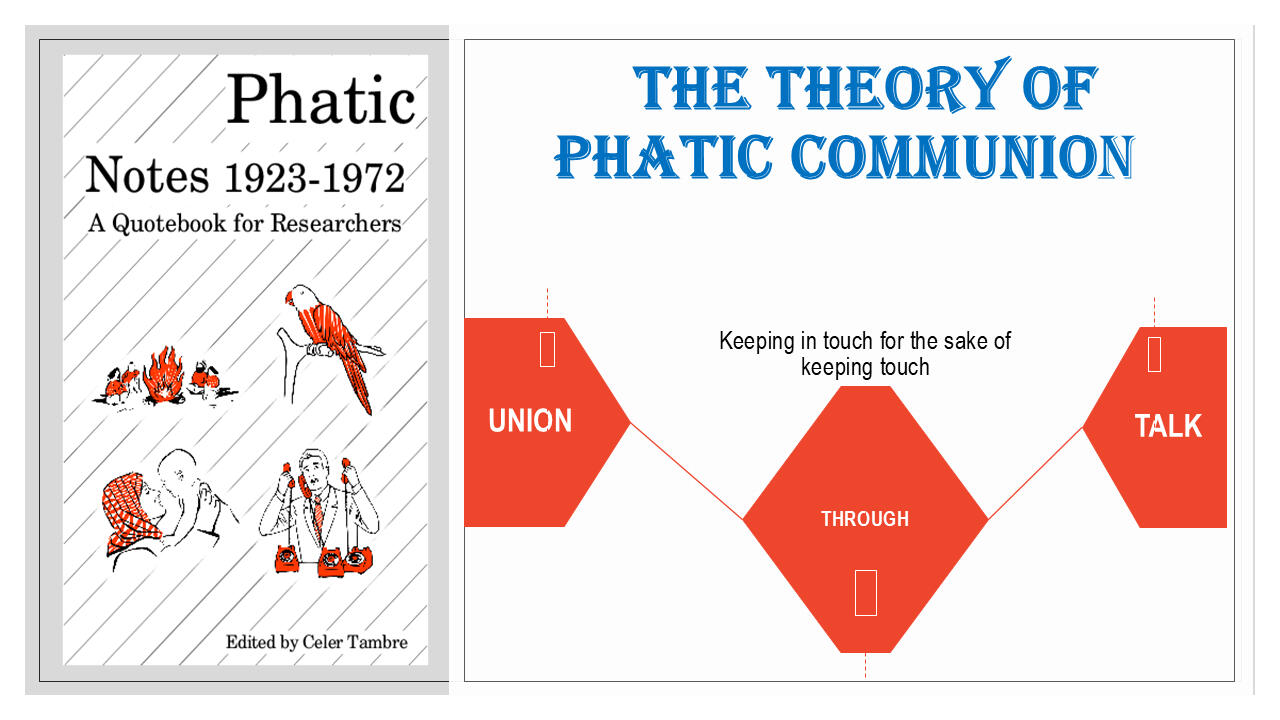
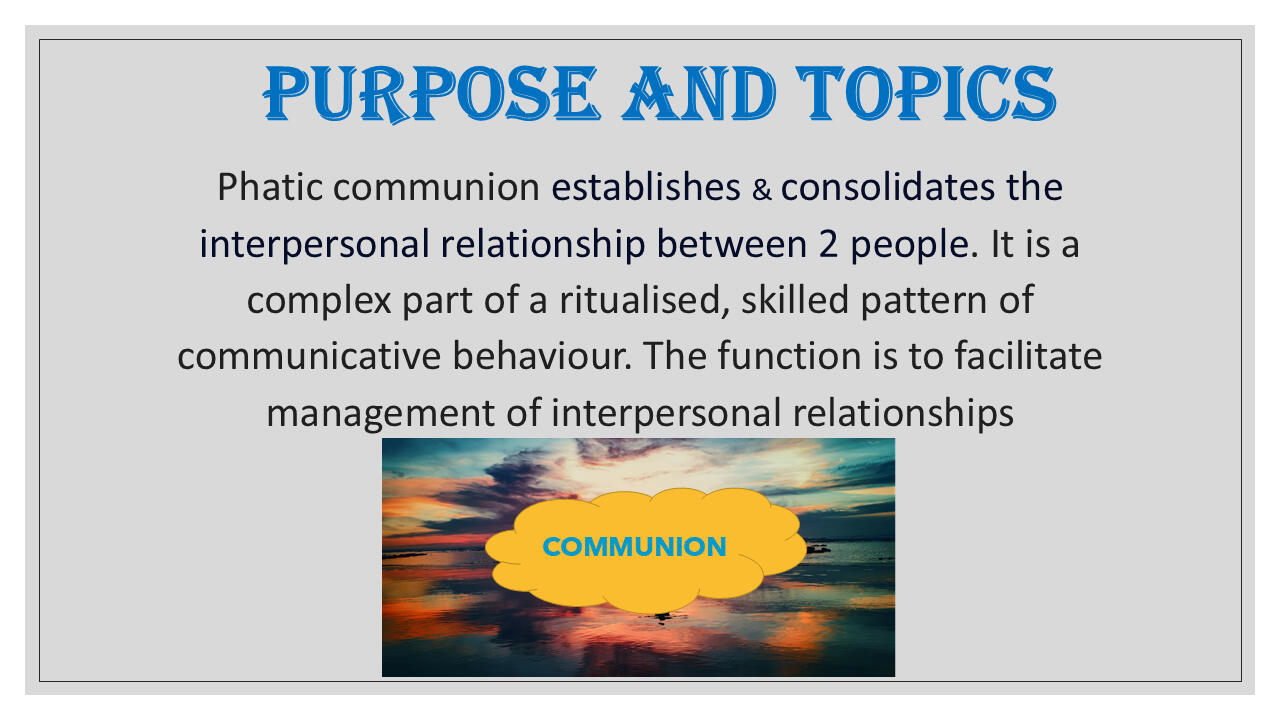
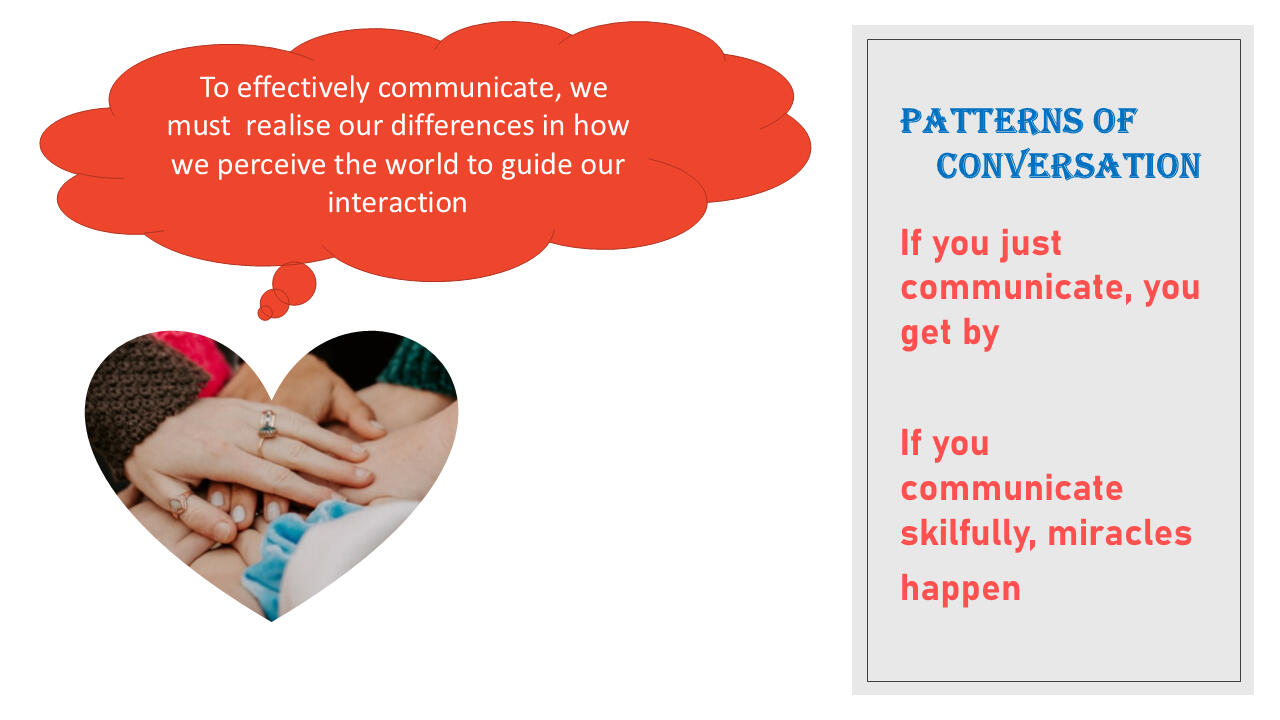
Phatic communication enables relationship building through social interaction without the goal of completing a task or conveying information. This creates better relationships and makes a more effective environment. Western culture puts more value on senders than receivers and on the content rather than the context of a message, whereas Eastern ones communicate with the listener in mind. These cultural values are reflected in our definitions and models of communication.Social bonding - is the function of phatic communication and must occur for information to be understood
Establishing & maintaining - an harmonious atmosphere is important for interlocutors
Social lubricant - role of phatics in communicative interactions is easily forgotten in time-bound situations
Sustaining communication lines - is of primary importance & vital for maximum performance
KNOWLEDGE CHECK
This examines the phatic process and approaches. Content is based on 3 sections of Chapter 6: Making a Connection with People, in the Intercultural Communication Matters course text. Tasks reflect International levels of learning 2-8, and can be completed as accredited prior learning or a qualification at Level 7 (Master of Professional Practice) or Level 8 (Doctor of Professional Practice). If wishing to gain an accredited certificate, it is necessary to complete 1 task from each section at the Level chosen.
The Theory of Phatic Communion
What are all the functions of Phatic communication? (Levels 2,3,4)
Observe a conversation and note the Phatic communication aspects used (Levels 2,3,4)
Choose an article that discusses Phatic theory and critically evaluate it (Levels, 5,6,)
Observe people and discuss the strategies employed by someone using Phatics well. (Levels 5,6)
Observe 2 different communicative events (e.g. meeting & lecture), noting the differences in Phatic use (Levels 7,8)
Consult web-based sources and evaluate their Phatic use (Levels 7,8)Purpose and Topics
Give some examples of small talk (Phatics) over the course of a day’s situations and reflect on them (Levels, 2,3,4)
Record a short conversation to locate the Phatic topics and discuss these (Levels 2,3,4)
Watch a TV programme and discuss the Phatic strategies to keep the audience engaged (Levels 5,6)
A web blog has discussed Phatics as unnecessary and boring. Give your response to your own experiences Levels 5,6)
Observe a listener, recording the Phatic behaviour they use to keep conversation going, and discuss (7,8)
Critically review an article on the purpose of Phatics (7.8)Patterns of Conversation
Make a poster to promote good conversation. Levels 2,3,4)
Note the different greetings of people that you know and discuss their impact (Levels 2,3,4)
Research the Phatic strategies of 3 different cultures and discuss the difficulties that might arise from their differences (Level 5,6)
Compare the patterns of conversations between a male and female (Levels 5,6)
Investigate Grices’maxims of communication, and discuss their relevance (Levels 7,8)
Devise a survey to assess what people consider as good communication and evaluate the results (Levels 7,8)
To gain a Certificate in Professional Studies, you need to study 2,3,4 courses
To gain a Higher Certificate in Professional Studies, you to need to study 5,6 courses
To gain a Masters Certificate in Professional Studies, you need to study 7 courses
To gain a Doctors Certificate in Professional Studies, you need to study 8 courses
Module 9: MODELS FOR TEACHING COMMUNICATION
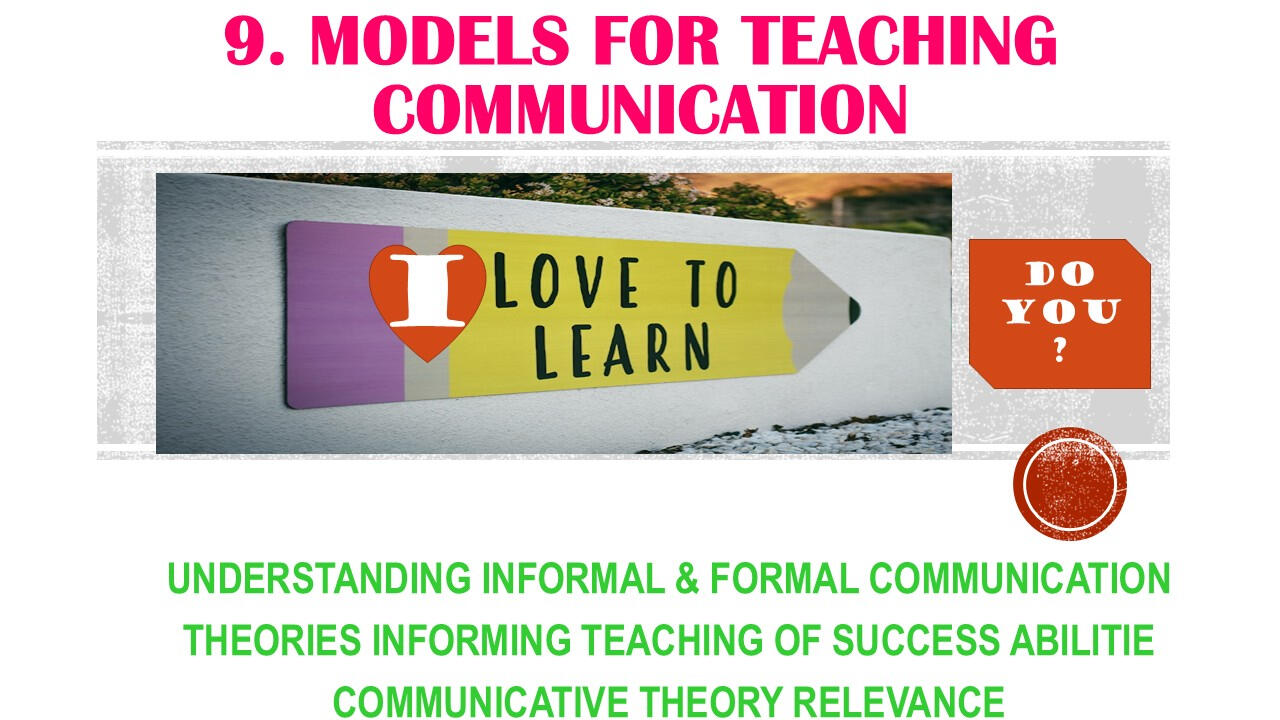
A Model of Communication is a simplified representation or framework that helps individuals understand how Communication works. It is like a map that guides and navigates them through the complex process of exchanging information, ideas, and emotions with others. It provides insights into the different elements involved in Communication, such as: sender (ideas) - message (encodes) – transmission (signals) – recipient (decodes) – receiver (meaning). These have expressive, informative, directive, aesthetic and phatic roles. Jakobson’s theory poses 6 factors (below). Each one is the focal point of a relation, or function that operates between the message and the factor.
When analysing language functions for a given unit (word, text or image), we specify to which class or type it belongs (e.g., a textual or pictorial genre), which functions are present/absent, & characteristics, including the hierarchical relations and others that may operate between them, as in the:Context - forming the setting or the reason for the message that will be communicated.
Addresser - the person delivering a message to a specific audience.
Addresse - the audience that receives the message. Must consist of at least one person, but could include many people.
Contact - a relational channel & connection between addresser & addressee. Connection keeps communication lines open.
Common code & message - includes rules that combine to form the message & correspond to the type of language used.
KNOWLEDGE CHECK
This examines models for teaching communication. Content is based on 3 sections of Chapter 6: Models for Teaching Intercultural Communication, in the Intercultural Communication Matters course text. Tasks reflect International levels of learning 2-8, and can be completed as accredited prior learning or a qualification at Level 7 (Master of Professional Practice) or Level 8 (Doctor of Professional Practice). If wishing to gain an accredited certificate, it is necessary to complete 1 task from each section at the Level chosen.
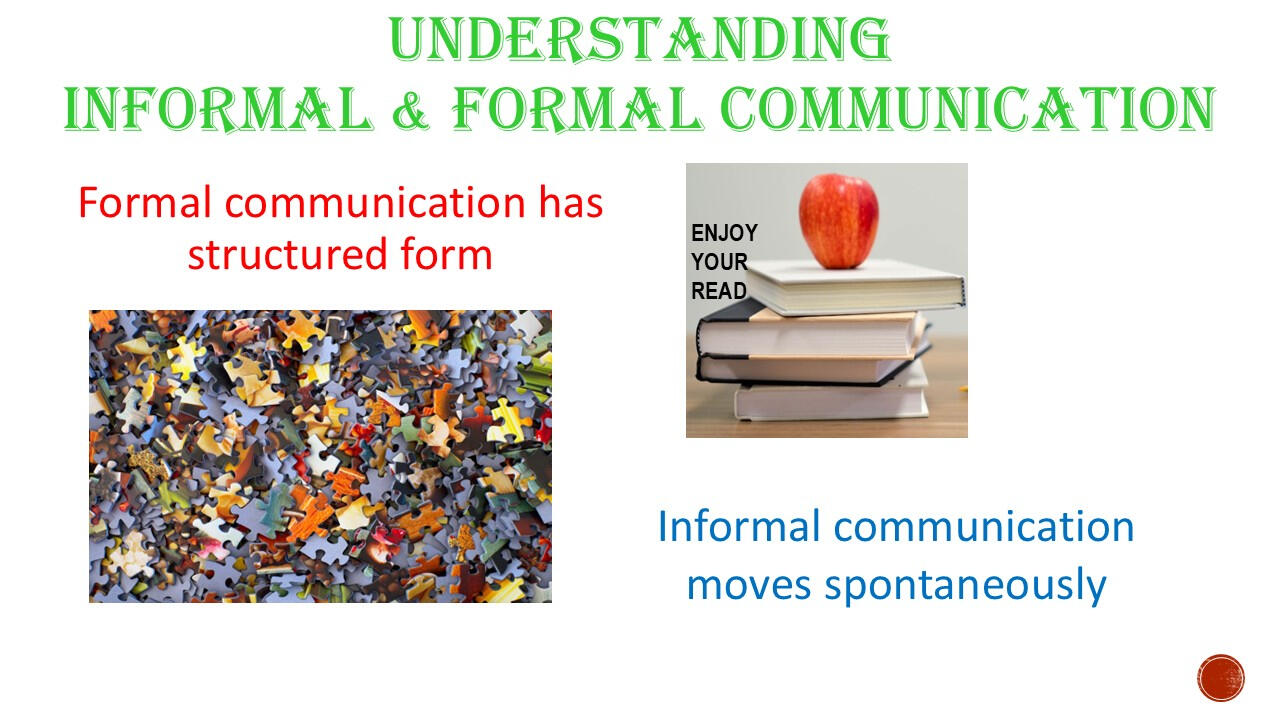
Understanding Informal and Formal Communication
Providing your own example, outline the differences between informal and formal communication (Levels 2,3,4)
Assess your own communication abilities, noting strengths & areas to develop (Levels 2,3,4)
Compare an informal and formal communication event and critique their utility for your own organisation (Levels, 5,6,)
Review informal and formal communication, as explained in literature, and discuss differences (Levels 5,6)
Assess the communication types relevant for your context needs (Levels 7,8)
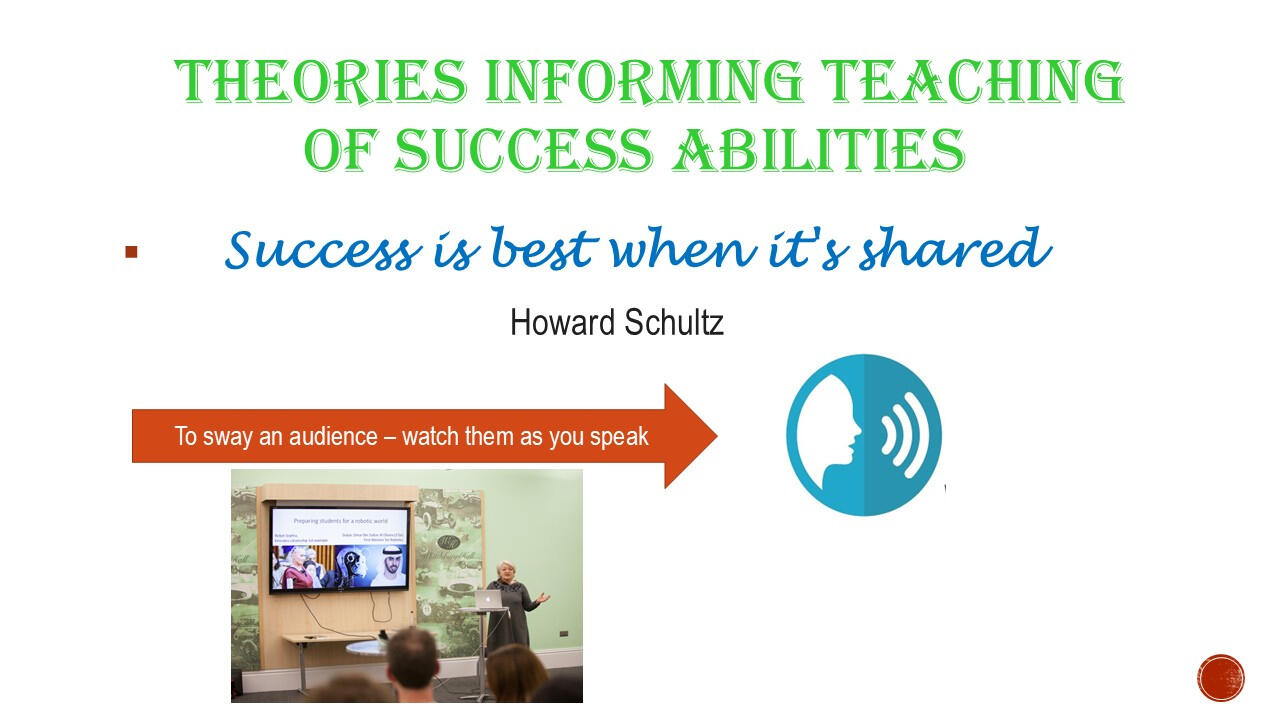
Explain why limited narrative communication affects higher level thinking (Levels 7,8)Theories Informing the Teaching of Success Abilities
Describe a communication event, and outline strengths and weakness (Levels, 2,3,4)
How does communication function to provide the content for a model (Levels 2,3,4)
Compare 2 communication models and critique them for strengths and weaknesses (Levels 5,6)
What are the advantages and disadvantages of using communication models for management (Levels 5,6)
Devise a plan to assess communication abilities in your particular context (7,8)
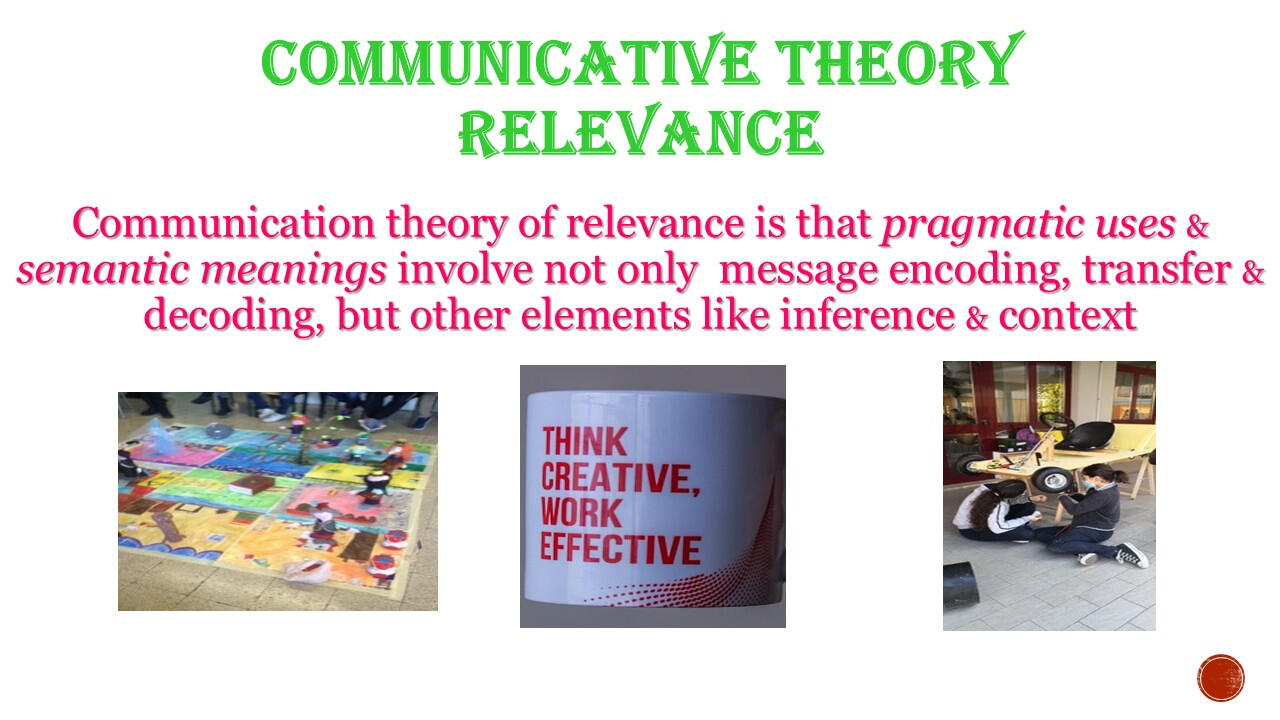
Critically review an article on the purpose of communication models (7.8)Communicative Theory Relevance
Make a poster to promote the communication process. Levels 2,3,4)
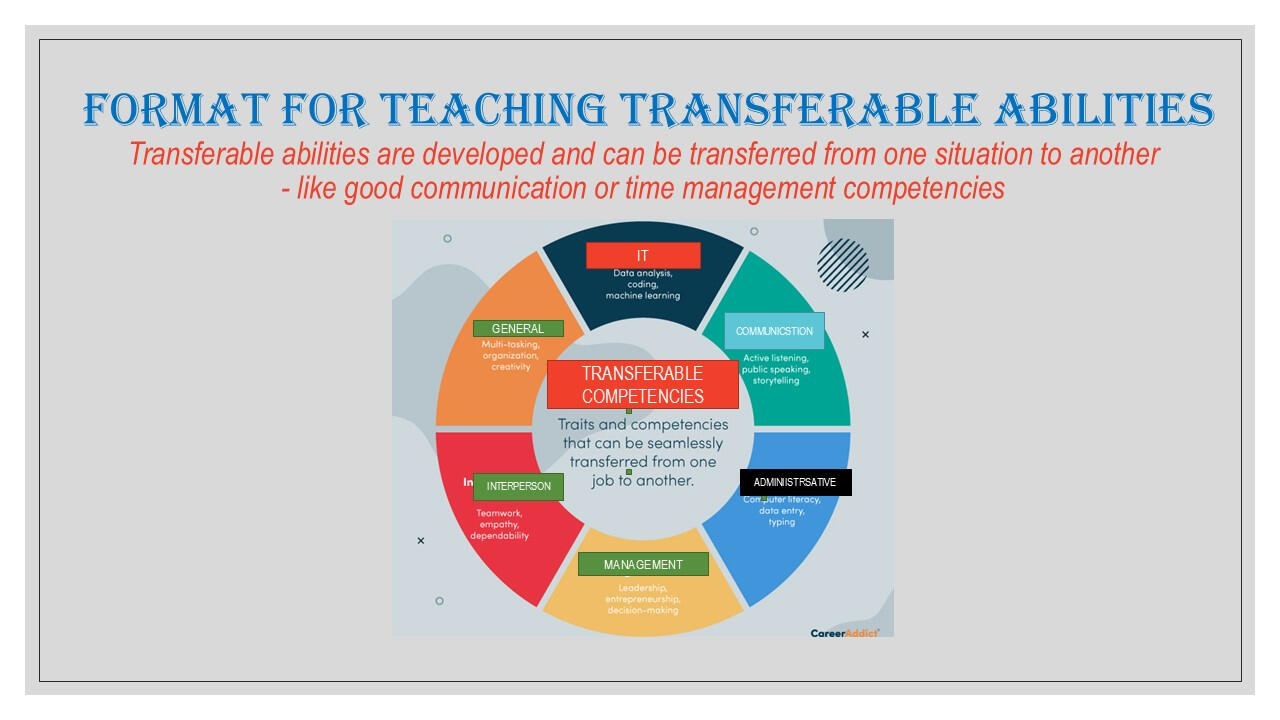
What are transferable competencies and how can they be developed? (Levels 2,3,4)
Assess your own transferable abilities, with a plan for their development (Level 5,6)
Choose an article on success abilities to critically evaluate (Level 5,6)
In a case study, assess the role of personality on an individual’s communication (Levels 7,8)
Assess a strategy to improve communication in your context (Levels 7,8)
To gain a Certificate in Professional Studies, you need to study 2,3,4 courses
To gain a Higher Certificate in Professional Studies, you to need to study 5,6 courses
To gain a Masters Certificate in Professional Studies, you need to study 7 courses
To gain a Doctors Certificate in Professional Studies, you need to study 8 courses
Module 10: A COMMUNICATION TEACHING APPROACH
Teaching communication opens up immense opportunities for people. The more an individual is able to communicate, the more successful their social interactions are in all situations. This creates greater chances for learning and practising thinking and its expression, now required at higher levels because technology is taking over job routines.Effective communication:
Is means to excel - clear communication helps to propel you towards what it is most desired from life
Avoids misunderstandings - much goes wrong when something is lost in translation from different mother-tongues
The way to strong relationships & trust - sharing experiences and needs helps connection to others
Cultivating growth - as communicating is the essence of life, allowing us to express feelings and share thoughts
KNOWLEDGE CHECK
This examines the diversity process and approaches. Content is based on 3 sections of Chapter 10: A Communication Teaching Approach, in the Intercultural Communication Matters course text. Tasks reflect International levels of learning 2-8, and can be completed as accredited prior learning or a qualification at Level 7 (Master of Professional Practice) or Level 8 (Doctor of Professional Practice). If wishing to gain an accredited certificate, it is necessary to complete 1 task from each section at the Level chosen.
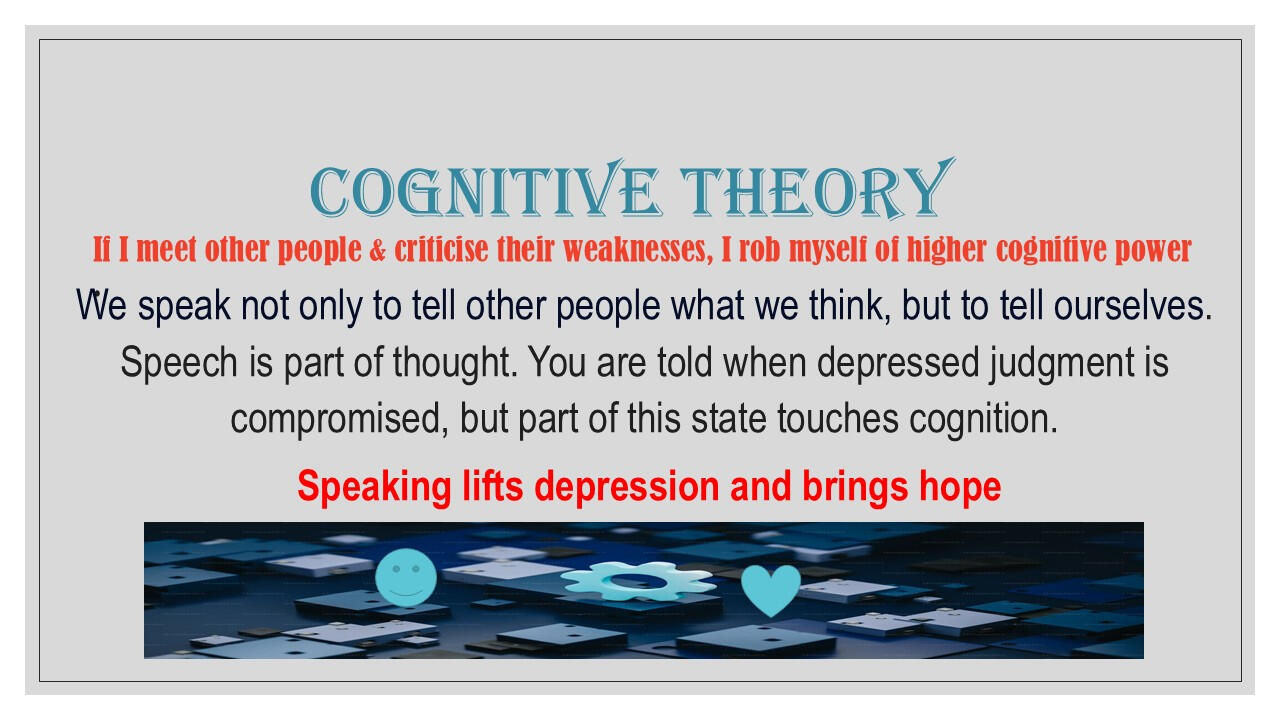
Cognitive Theory
Draw a diagram of the brain, to show the main functions of the Left and Right sides (hemispheres) (Levels 2,3,4)
Discuss the different cognitive theories, and how they link language and thinking development (Levels 2, 3, 4)
Create some activities to activate both Left and Right brain growth, and comment on the importance of this (Levels 5,6,)
Read an article on cognitive theories to critically review (Levels 5,6)
Devise an assessment to observe both Left and Right brain functions, Try this out and discuss the results (Levels 7,8)
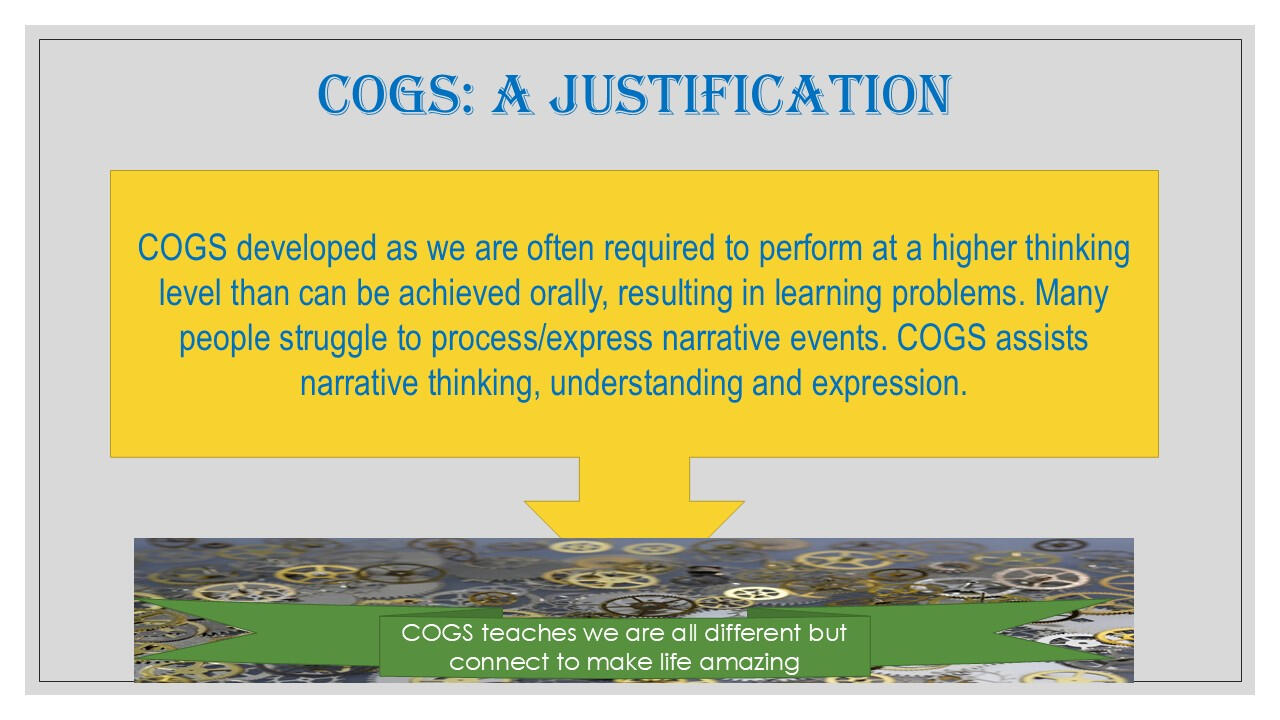
An activity, like apple picking, demands both brain side approaches. Devise a diagram to illustrate this example (Levels 7,8)The Communication Opportunity Group Strategy (COGS)
Devise a poster to present the message systems within communication (Levels, 2,3,4)
Take one aspect of the message system, and give examples of its use (Levels 2,3,4)
Devise a plan to teach the message system in an active way (Levels 5,6)
Take someone you know and analyse the messages they are communicating about themselves (Levels 5,6)
Models are developed for a particular purpose. Describe how COGS was devised and discuss the framework (Levels 7,8)
Carry out the assessment on how you feel about yourself and communication, in the chapter appendix, with a group & evaluate (Levels 7.8)A Justification for Teaching Transferable Abilities
Carry out the baseline assessment in the appendix on a group, and discuss the results Levels 2,3,4)
Try a contact activity with an individual or group and comment on the response/s (Levels 2,3,4)
Conduct the assessment of communication in the appendix on yourself and evaluate the data (Level 5,6)
Devise an instruction sheet to show how the writing frame can be used with a particular age group (Levels 5,6)
Devise a plan to develop one of the narrative levels and discuss the benefits of this (Levels 7,8)
Write a report justifying the teaching/training of formal communication levels (Levels 7,8)
To gain a Certificate in Professional Studies, you need to study 2,3,4 courses
To gain a Higher Certificate in Professional Studies, you to need to study 5,6 courses
To gain a Masters Certificate in Professional Studies, you need to study 7 courses
To gain a Doctors Certificate in Professional Studies, you need to study 8 courses
Module 11: FORM, CONTENT AND USE OF LANGUAGE
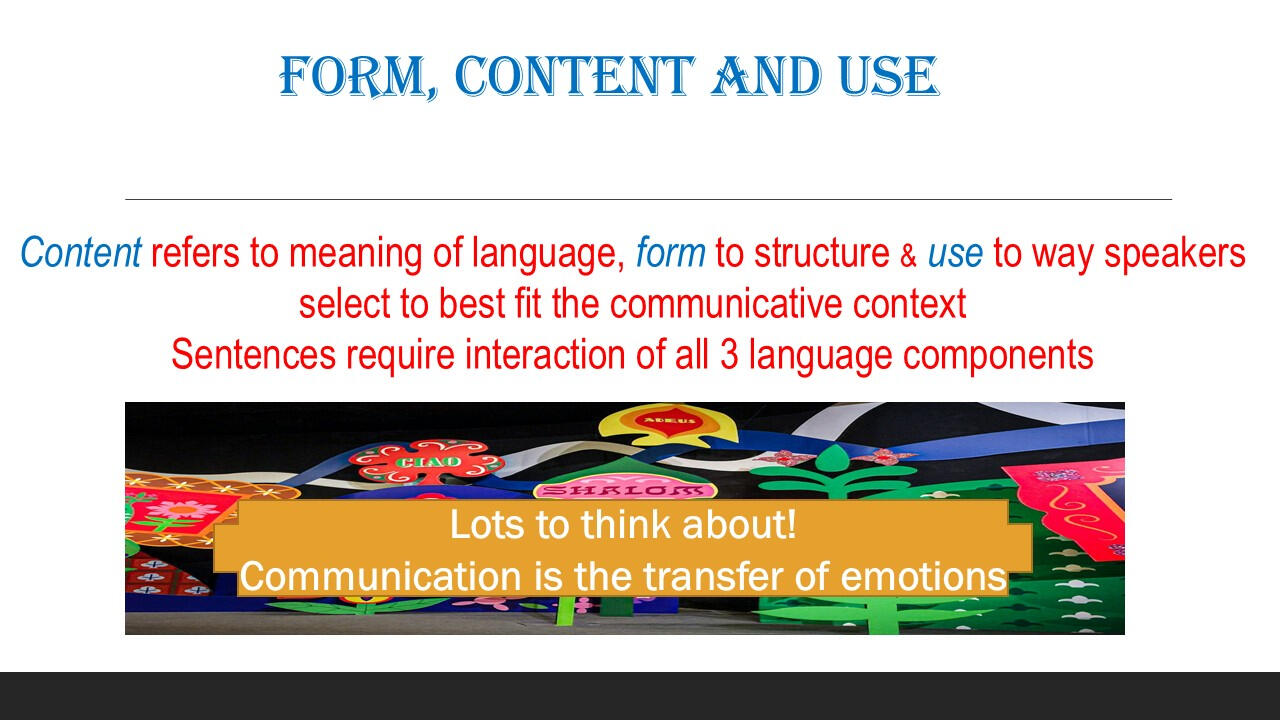
Language is often characterised as having 3 interrelated components: form, content & use (Bloom & Lahey, 1978). Form refers to the structure of language, content is the meaning of language and use is the way speakers select different forms that best fit the communication context.Form – is a vital set of standard features and structures that inform users about how to communicate with an audience. They can choose to follow or ignore these standards, depending on the content they are creating.
Content – is the meaning of information. Language contains words to describe everything that we know about our world. These words define objects, actions, events, and concepts.
Use – study of how people use language – what words & phrases they unconsciously choose & combine, help us to better understand ourselves and why we behave like we do.
KNOWLEDGE CHECK
This examines the diversity process and approaches. Content is based on 3 sections of Chapter 11: Form, Content & Use of Language, in the Intercultural Communication Matters course text. Tasks reflect International levels of learning 2-8 and can be completed as accredited prior learning or a qualification at Level 7 (Master of Professional Practice) or Level 8 (Doctor of Professional Practice). If wishing to gain an accredited certificate, it is necessary to complete 1 task from each section at the the Level chosen.
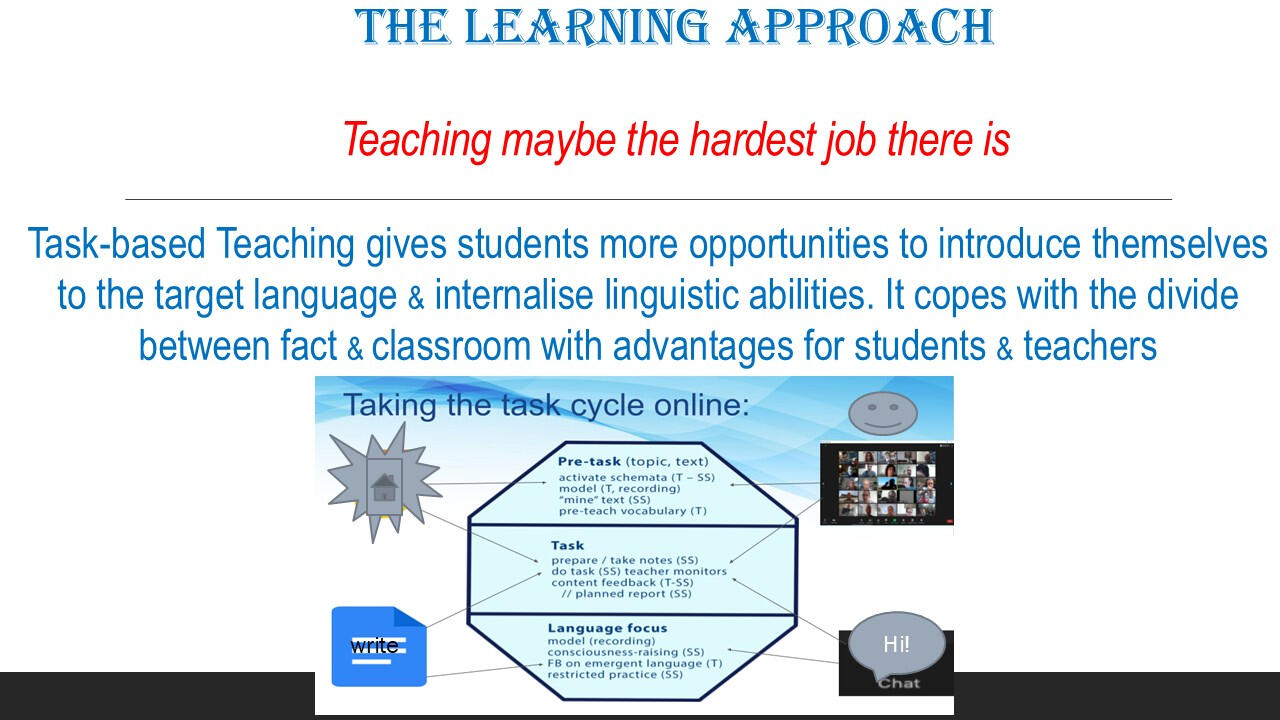
The Learning Approach
Describe the Learning Approach and reflect on this from your own experience (Levels 2,3,4)
Examine the Language Habit Tool Kit on line, and comment on its utility (Levels 2,3,4)
Try out the grammar activity in the book section on a group and discuss responses (Levels, 5,6,)
Devise a short survey to discover how people memorise new information and trial it with a discussion on results (Levels 5,6)
Devise a strategy to discover a person’s learning style and try this out with a discussion of results (Levels 7,8)
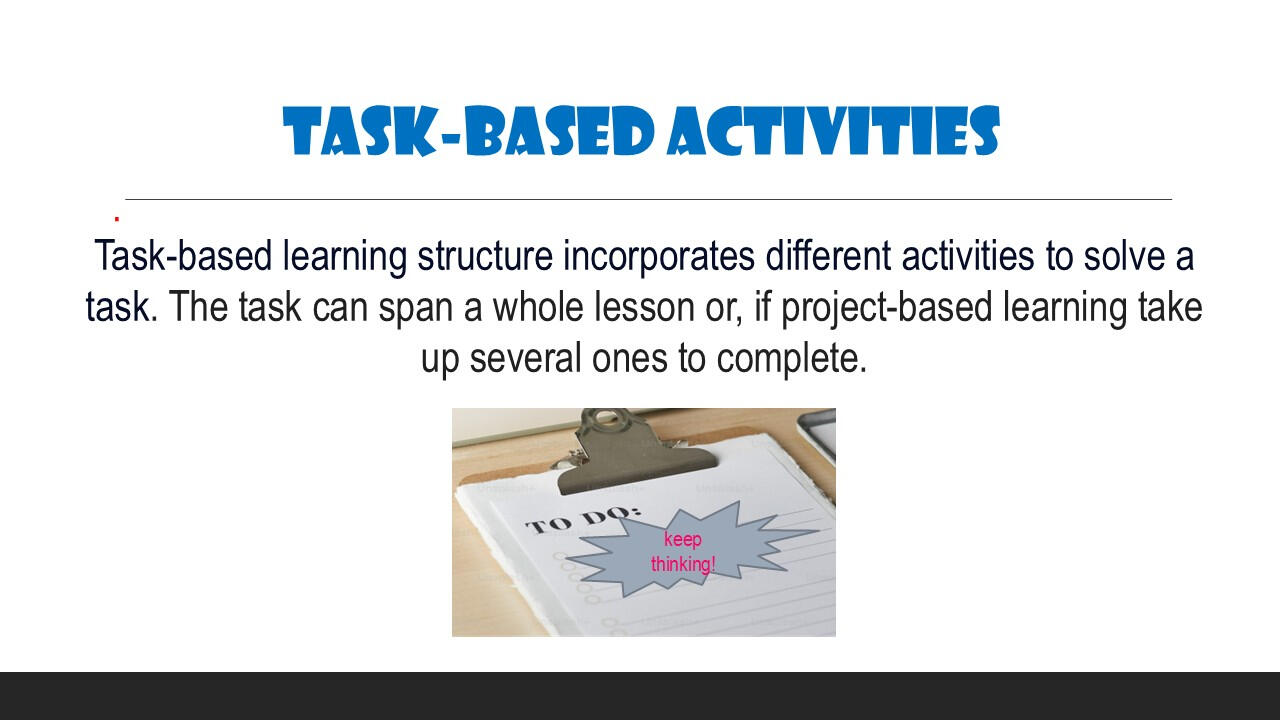
Review an article about learning approaches and critically evaluate it(Levels 7,8)Task-based Activities
Describe the different types of task based activities and comment on these from your experience (Levels, 2,3,4)
Try out one of the task based activities, described in the book chapter, and review the response (Levels 2,3,4)
Devise a task based activity, suitable for a particular age group and circumstance (Levels 5,6)
Using the information, reasoning and opinion gap concepts devise some tasks to develop these competencies and evaluate (Levels 5,6)
Use the Algy and the Bear verse to ask a group what is the missing information, and review responses (Levels 7,8)
Devise a leaflet to explain the importance of task-based activities for teaching communication (Levels 7.8)Form, Content and Use
Outline the basics of teaching language Form, Content and Use (Levels 2,3,4)
Devise an activity to teach one of the aspects of language, and discuss the importance of this (Levels 2,3,4)
Write a leaflet to give people help to develop their language Form, Content and Use (Level 5,6)
Critically review an article on the teaching of language (Levels 5,6)
Carry out the interview task, in the chapter, on a group, and review the responses of what they have learnt (Levels 7,8)
Interview a teacher of language and discover what are the challenges of this role (Levels 7,8)
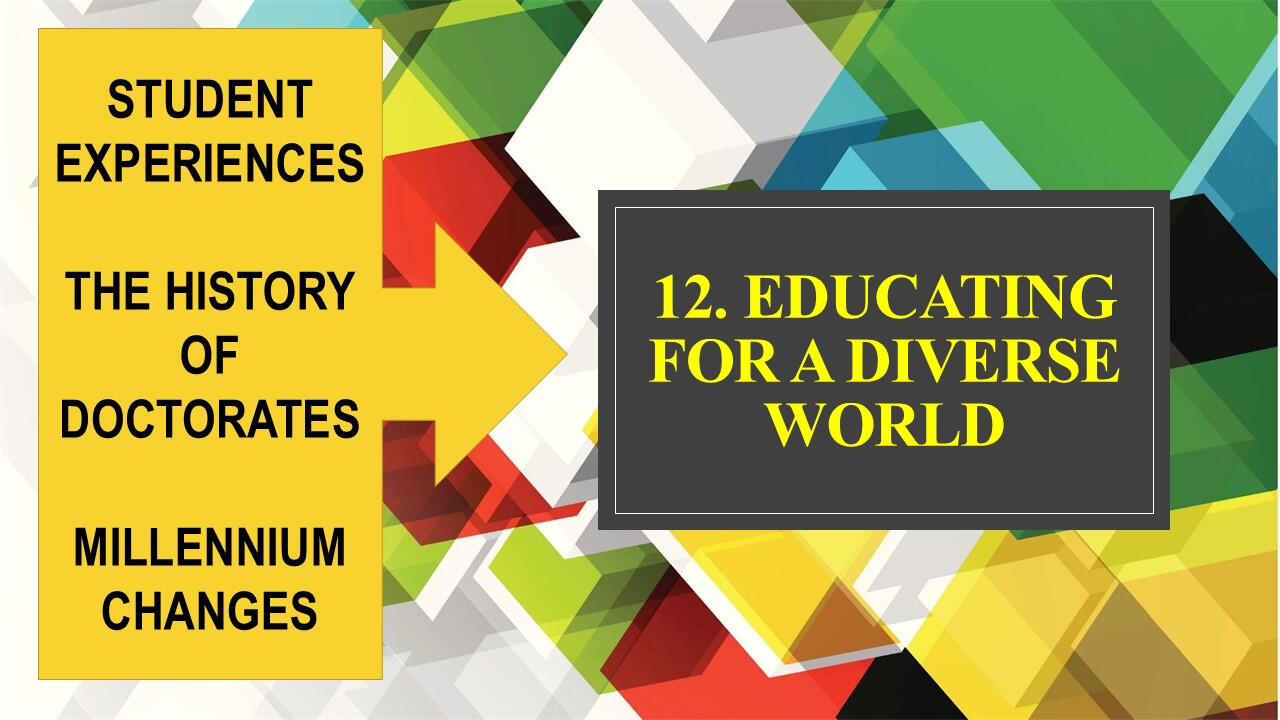
Module 12: EDUCATING FOR A DIVERSE WORLD
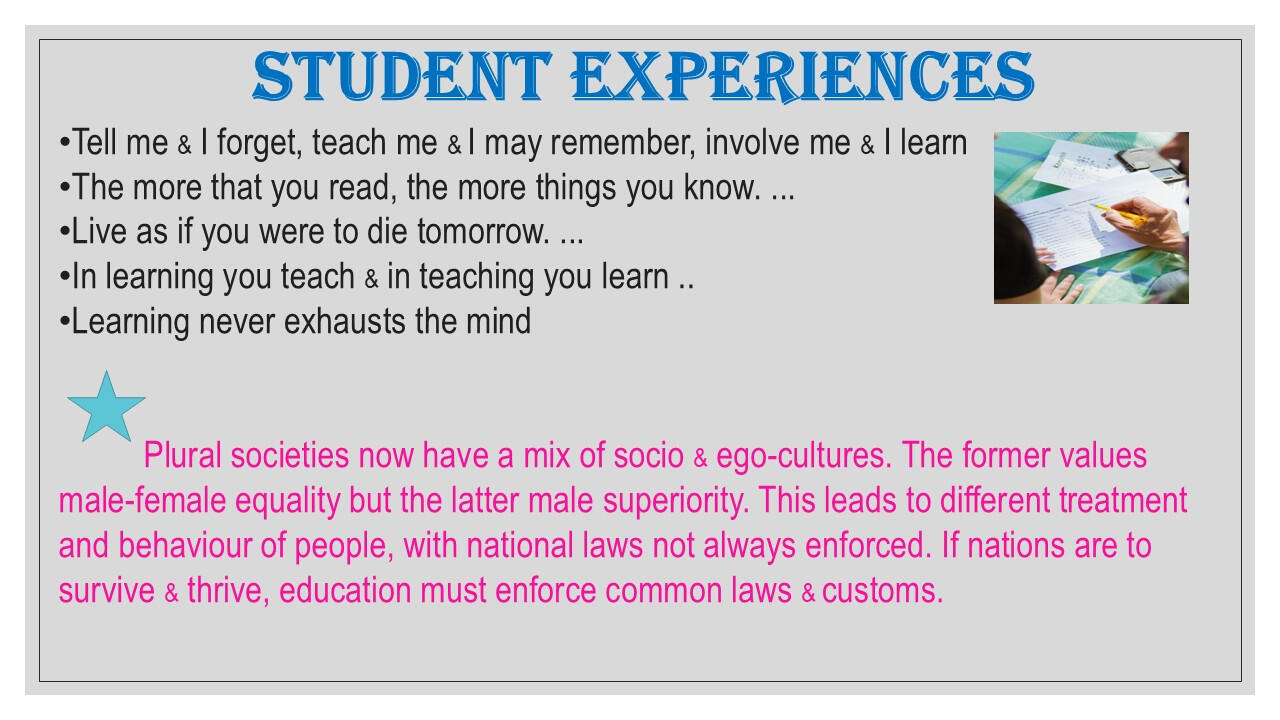
The main issues for education, in a diverse world, are language barriers, cultural differences, the decision-making process, discrimination, skewed content, limited universal access and varying time spent in formal study. Lack of teaching experience, time, classroom management, discipline, and insufficient foreign language knowledge are problems of teachers and students:Time constraints – due to frequent testing schedules implemented in countries like Britain to limit holistic concerns
Pedagogical limitations – due to transmissive teaching reducIng active approaches for implementing knowledge
Inadequate resources – education must have up-to-date technology to prepare for workplace needs, which is expensive and requires ongoing training for everyone
Personal beliefs and biases – have a cultural basis to resist changes in values, attitudes and actions
Inadequate guidance – due to teachers without knowledge of the complexities of educating plural societies
KNOWLEDGE CHECK
This examines the diversity process and approaches. Content is based on 3 sections of Chapter 12: Educating for a Diverse World, in the Intercultural Communication Matters course text. Tasks reflect International learning levels 2-8, and can be completed as accredited prior learning or a qualification at Level 7 (Master of Professional Practice) or Level 8 (Doctor of Professional Practice). If wishing to gain an accredited certificate, it is necessary to complete 1 task from each section at the Level chosen.
Student Experiences
Outline the issues for students in multicultural settings and discuss them (Levels 2,3,4)
Review the teaching approaches used in multicultural learning/training contexts to reflect on their effectiveness (Levels 2,3,4)
Give an example of good practice in developing learning for plural settings and discuss the reasons (Levels, 5,6,)
Organise a discussion with a plural group to review their challenging issues and suggest changes (Levels 5,6)
What is the disconnection between education and society needs? Discuss this issue (Levels 7,8)
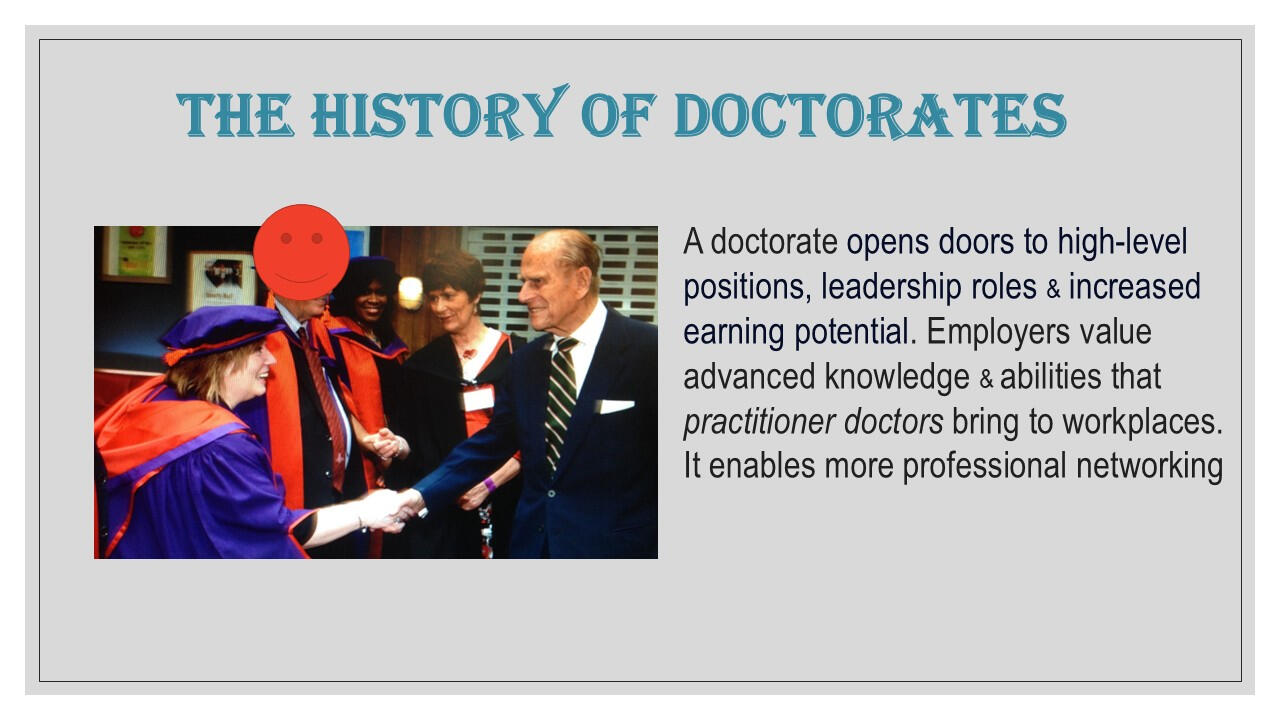
Produce a survey for teachers to respond to their needs for better training in education for diversity & evaluate results (Levels 7,8)History of Doctorates
Give an explanation of the different Level 8 models (doctorate level) and review their impact (Levels 2,3,4)
Describe an area that needs improvement in your setting, and how this might be investigated in a practitioner approach (Level 2,3,4)
Read an article on doctoral training and critically review it. (Levels 5,6)
Interview someone with a doctorate, and examine the pros and cons about their experience in training (Levels 5,6)
Review the history of doctorates across the world, and discuss the model needed for the modern world (Levels 7,8)
Devise a study to examine education for diversity and justify your methods (Levels 7.8)Millennium Changes
Record in some way some common responses to changes required in education (poster, audio, video) Levels 2,3,4)
Give an example of active learning that you know about and evaluate the benefits (Levels 2,3,4)
Present a model of modern education that works and review the positives (Level 5,6)
Take two subjects – a successful learner and one who is not, and evaluate their responses (Levels 5,6)
Review the problems of learning today, that must fit people for living and working across cultures (Levels 7,8)
Complete a book review of a text that examines the challenge of education in a modern, plural world (Levels 7,8)
CONGRATULATIONS! 🎉
If you’ve made it to this final slide and have read all the materials and watched all the videos along the way, it means...
Congratulations!
You have completed the INTERCULTURAL COMMUNICATION MATTERS course!
Fill out the information below to receive your Certificate of Completion at your email address.
